Only 11% of domains get cited by both ChatGPT and Perplexity for the same topic. That single number is why AI citation tracking exists as a discipline: appearing in one AI platform's answers tells you almost nothing about whether you appear in another's, and you cannot fix a gap you are not measuring.
This guide answers the five questions people actually ask when shopping for a citation tracking tool: how the platforms compare on citation rate performance, which ones offer the strongest reporting, which give the deepest analytics, which are worth paying for to monitor citation rate day to day, and which specifically report citation rate at the domain and URL level. Each gets its own section below, then full reviews of all six tools, then an FAQ.
How do the platforms compare on citation rate performance?
| Tool | Platforms covered | Citation rate reporting | Competitor tracking | Trend data | Sentiment analysis | Traffic attribution | Starting price |
|---|---|---|---|---|---|---|---|
| LLMrefs | 6+ (ChatGPT, Perplexity, Claude, Gemini, Copilot, more) | Per platform and per URL, trended | Yes, deep | Yes | Basic | No | ~$79/mo |
| Otterly.AI | 4+ (ChatGPT, Perplexity, AI Overviews, Copilot) | Blended rate, sentiment-tagged | Yes | Yes | Yes | No | ~$29/mo |
| AIclicks | 4+ (ChatGPT, Perplexity, Gemini, Copilot) | Per query, correlated to traffic | Yes | Yes | Basic | Yes | ~$59/mo |
| Mangools AI Search Watcher | 7 (ChatGPT, AI Overviews, Gemini, Claude, Grok, Mistral, Llama; no Perplexity) | Per platform snapshot | Limited | Yes | No | No | ~$16/mo |
| Chatbeat | 3 (ChatGPT, Gemini, Perplexity; no Claude, no Copilot) | Per conversation and per platform | Yes | Yes | Yes | No | Contact for pricing |
| AY Rank Visibility Checker | Readiness audit, not a tracker | Not reported (readiness score only) | No | No | No | No | Free |
| AY Rank Entity Analyzer | Entity audit, not a tracker | Not reported (entity score only) | No | No | N/A | No | Free |
On pure citation rate performance, three tools separate from the pack. LLMrefs covers the most platforms and breaks citation rate down per platform and per URL, so you can see exactly where a drop is coming from instead of one blended number. AIclicks ties citation rate to GA4 sessions and conversions, the only tool here that answers "did this citation actually send anyone to my site." Otterly.AI reports a single blended citation rate with sentiment attached, which is enough signal for most marketing teams without the setup overhead of the deeper platforms.
Mangools AI Search Watcher and Chatbeat both report citation rate too, but each has a real platform gap worth knowing before you buy: Mangools does not track Perplexity at all, and Chatbeat, despite rebranding toward search-style coverage (ChatGPT, Gemini, Perplexity), dropped Claude and Copilot in the process. Match the gap to where your buyers actually search before picking either one.
What are the top options for citation rate reporting?
"Reporting" and "tracking" get used interchangeably, but they answer different questions. Tracking tells you a citation happened. Reporting tells you what you can do with that data once you have it, the exports, dashboards, and formats you can actually hand to a client or a CMO.
- LLMrefs: trend charts with configurable date ranges, per-URL breakdowns, and white-label PDF/dashboard exports built specifically for agencies reporting to multiple clients.
- AIclicks: an ROI dashboard that converts citation counts into estimated revenue, the format finance and growth leads actually want to see, plus CSV export.
- Otterly.AI: weekly or daily email digests with sentiment tags baked in, and a simple CSV export for anyone building their own reporting deck.
- Mangools AI Search Watcher: a SERP-plus-AI side-by-side view inside the existing Mangools dashboard, useful if your reporting already lives there.
- Chatbeat: Slack and Teams alerts alongside dashboard reporting, built for teams that want citation drops to show up where the team already works, not in a separate login.
If reporting cadence and audience matter more to you than raw platform count, start with what format you need to produce (client PDF, exec dashboard, Slack alert, raw CSV) and pick the tool that outputs it natively rather than the one with the longest feature list.
Which platforms provide the most comprehensive citation rate analytics?
"Comprehensive" here means four things together: multi-platform coverage, historical trend depth, competitor share of voice, and source-URL attribution. Only two tools clear all four bars.
LLMrefs is the most complete: 6+ platforms, per-URL attribution, deep competitor benchmarking, and configurable trend charts in one dashboard. AIclicks is close behind and adds traffic and revenue correlation on top of citation analytics, at the cost of covering fewer platforms (four core LLMs rather than six-plus). Otterly.AI covers the analytics core well (rate, sentiment, alerting) across four platforms with the easiest learning curve of the three, but its competitor benchmarking is shallower than LLMrefs' side-by-side share-of-voice view.
Mangools and Chatbeat report analytics too, but each trades platform breadth for something else: Mangools trades Perplexity coverage for native SEO-data integration, Chatbeat trades Claude and Copilot coverage for chat-and-search hybrid tracking (it added Gemini and Perplexity but dropped the two chat-native platforms it used to be known for). Neither is a "comprehensive" pick on platform count alone.
What are the best tools for monitoring citation rate day to day?
For ongoing monitoring rather than a one-time audit, the deciding factor is how the tool alerts you to change, not just how it reports a snapshot.
- LLMrefs and Otterly.AI both support scheduled runs (daily or weekly) with drop alerts, the two most complete options for continuous monitoring.
- AIclicks monitors on a schedule and layers in conversion tracking, so a citation drop shows up alongside the revenue impact, not just the rate.
- Chatbeat pushes real-time Slack and Teams alerts, the fastest route from "citation dropped" to "someone on the team saw it."
- Mangools AI Search Watcher runs on a schedule inside the existing Mangools project structure, the lowest-friction option if your team already lives there.
- If you are not ready to pay for ongoing monitoring yet, the free AY Rank AI Visibility Checker and Entity Analyzer are a one-time readiness check, not a monitoring tool. Run one before you commit budget to any of the five above.
Which tools report domain and URL-level citation rate?
Source URL attribution, knowing exactly which page on your domain earned a citation, is the feature that turns citation tracking into a content roadmap instead of a vanity metric. Two tools in this list report it properly:
- LLMrefs: per-URL citation tracking with trend charts over time, the most complete option for ongoing domain-level reporting.
- AIclicks: URL-level citation data correlated with GA4 sessions, so you see which page earned the citation and whether it converted.
The other four tools in this guide report citation rate at the brand or platform level, not broken down by URL. If domain-level reporting is your primary requirement, LLMrefs and AIclicks are the only two that answer it directly; the rest tell you that you were cited, not which page earned it.
The 6 best AI citation tracking tools, reviewed
1. LLMrefs
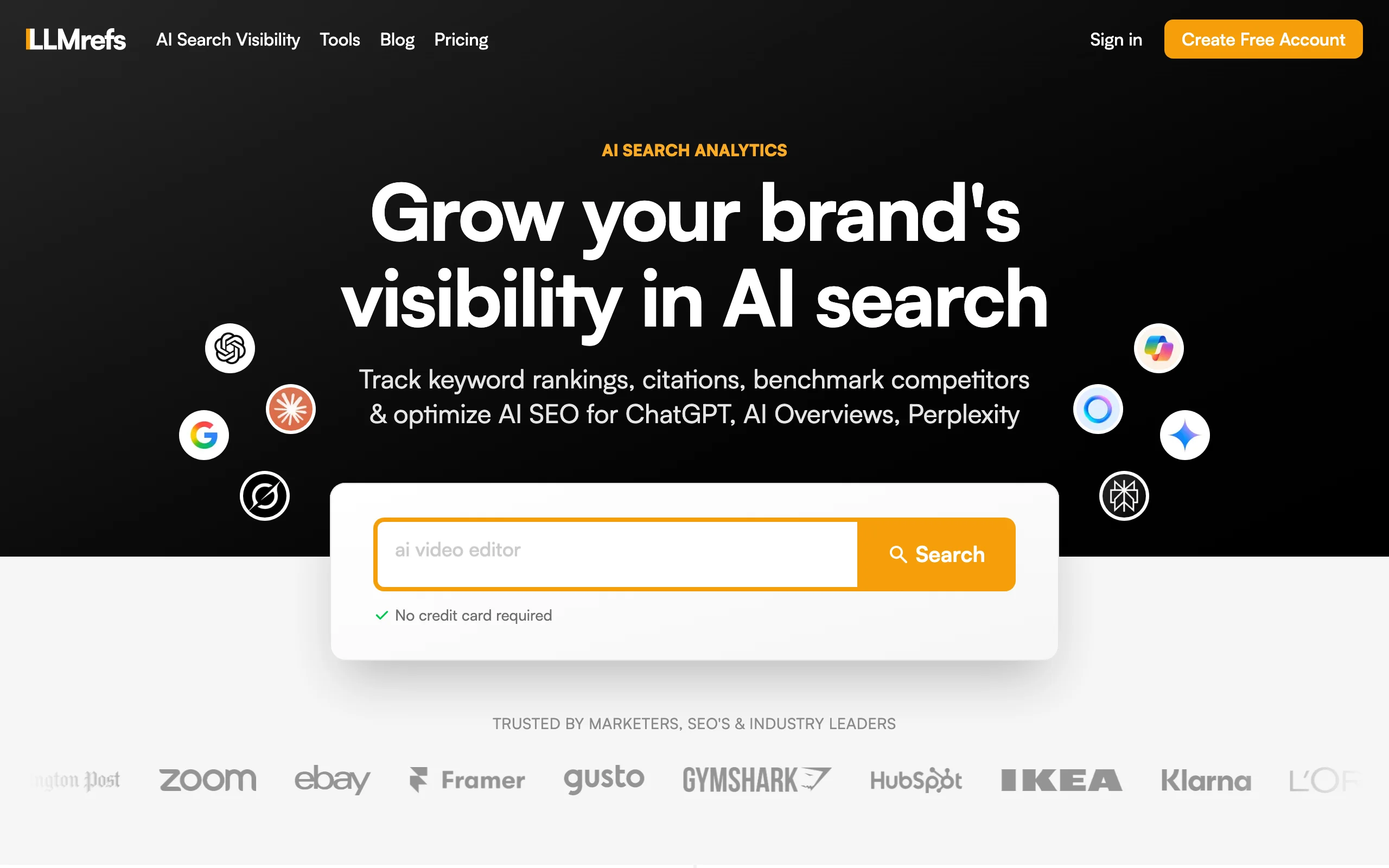 AI Citation Tracking Tool: LLMrefs
Best for: agencies and enterprise teams needing deep multi-model coverage
LLMrefs monitors brand mentions across ChatGPT, Perplexity, Claude, Gemini, and several other models from a single dashboard.
Key features:
- Multi-model tracking (6+ platforms) from a single dashboard
- Automated query scheduling on a defined cadence
- Competitor benchmarking with side-by-side share of voice comparisons
- Citation context extraction: see the exact sentence your brand was mentioned in
- Source URL tracking to identify which pages drive citations
- Trend charts with configurable date ranges
- White-label reporting for agencies
What it does well: breadth. If you need citation rate not just on ChatGPT but across every major AI platform, this is the most thorough option. Competitor benchmarking is particularly strong, you can see exactly where competitors are displacing you and on which platforms.
Limitations: the full feature set is priced for agencies managing multiple clients or enterprise brands with real AI search budgets. Lower tiers cap query volume, which can be restrictive for large keyword sets.
Pricing: confirmed live at $79/month for solo practitioners, scaling to custom enterprise pricing (checked llmrefs.com/pricing, September 2026).
2. Otterly.AI
 AI Citation Tracking Tool: Otterly.AI
Best for: marketing teams wanting a clean, marketer-friendly interface
Otterly is built for fast setup: enter your brand, your competitors, and a list of topics or keywords, and it starts monitoring within minutes.
Key features:
- Brand and competitor monitoring across ChatGPT, Perplexity, Google AI Overviews, and Copilot
- Automated daily or weekly query runs with email digest reports
- Sentiment classification for each citation (positive / neutral / negative)
- Topic clustering to see which themes drive your citations vs. competitors'
- Alerting when your citation rate drops significantly
- CSV export for reporting
What it does well: the interface is polished and accessible to marketers who are not deeply technical. Sentiment classification and the alert system are useful for brand protection: if a negative narrative starts showing up in AI responses, Otterly surfaces it fast.
Limitations: platform coverage is narrower than LLMrefs, and query customization is less granular. Teams with complex, intent-segmented keyword strategies may find the query builder limiting.
Pricing: confirmed live at $29/month for the entry paid plan, up to $189/month and $489/month on higher tiers; free trial rather than a permanent free tier (checked otterly.ai/pricing, September 2026).
3. AIclicks
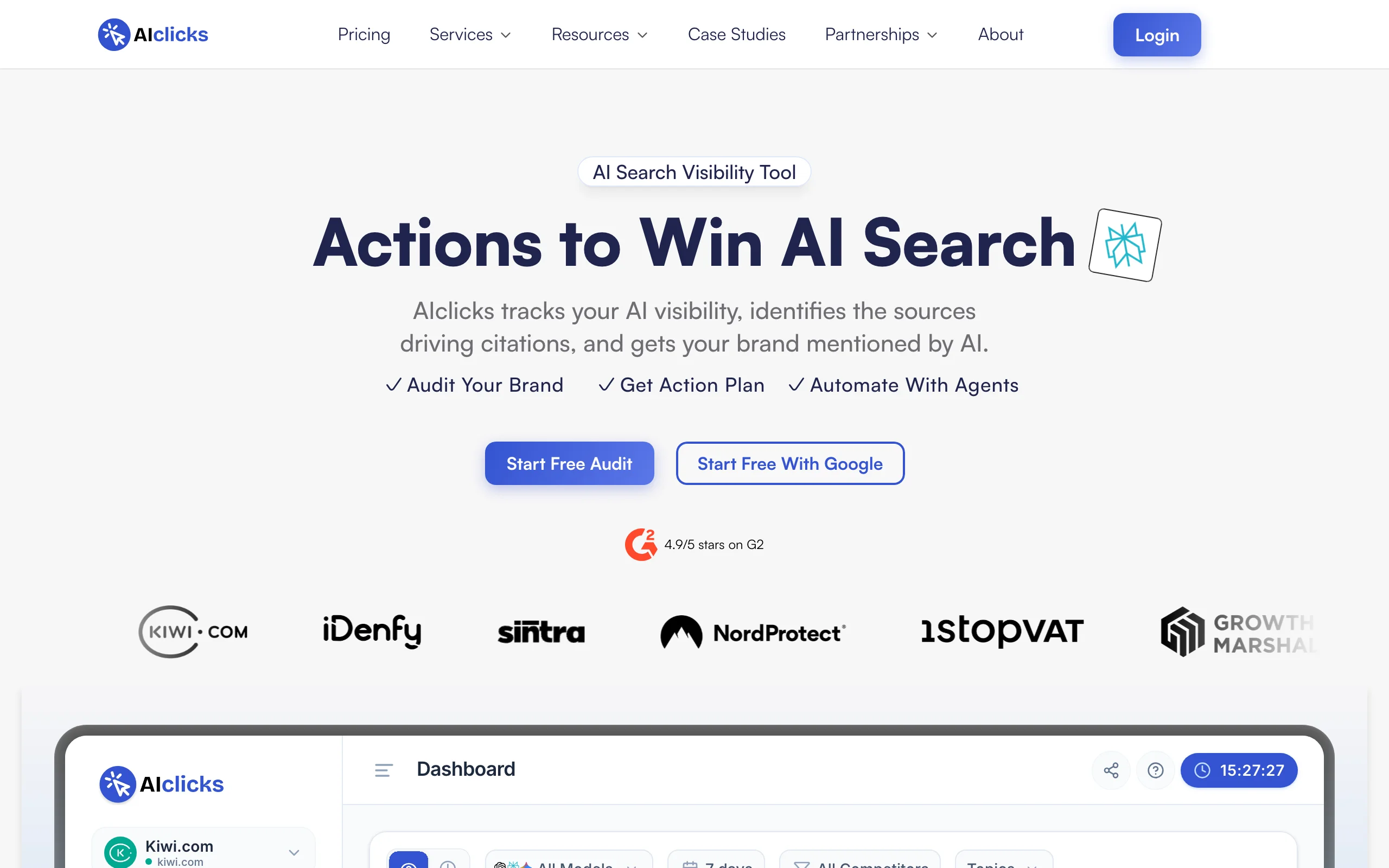 AI Citation Tracking Tool: AIclicks
Best for: performance marketers focused on AI-driven traffic and conversion data
AIclicks bridges citation tracking and traffic analytics: it correlates citation data with GA4 to estimate whether mentions are actually sending traffic and generating conversions.
Key features:
- Citation tracking across major LLM platforms
- Traffic attribution modeling to estimate sessions from AI-cited appearances
- Conversion path analysis for AI-sourced visits
- Keyword-level citation reporting with query intent classification
- GA4 and major analytics platform integration
- ROI dashboard that translates citation data into estimated revenue impact
What it does well: for teams justifying AI search investment to a CFO or head of growth, AIclicks provides the closest thing to a revenue-attributable AI visibility report available today. The traffic correlation layer is genuinely differentiated.
Limitations: attribution modeling for AI-sourced traffic is inherently imperfect, AI platforms don't consistently pass referrer data, so some estimation is involved. AIclicks is transparent about this, but understand the methodology caveats before presenting the data to executives.
Pricing: confirmed live at $59/month for the entry plan, up to $189/month and $499/month on higher tiers (checked aiclicks.io, September 2026).
4. Mangools AI Search Watcher
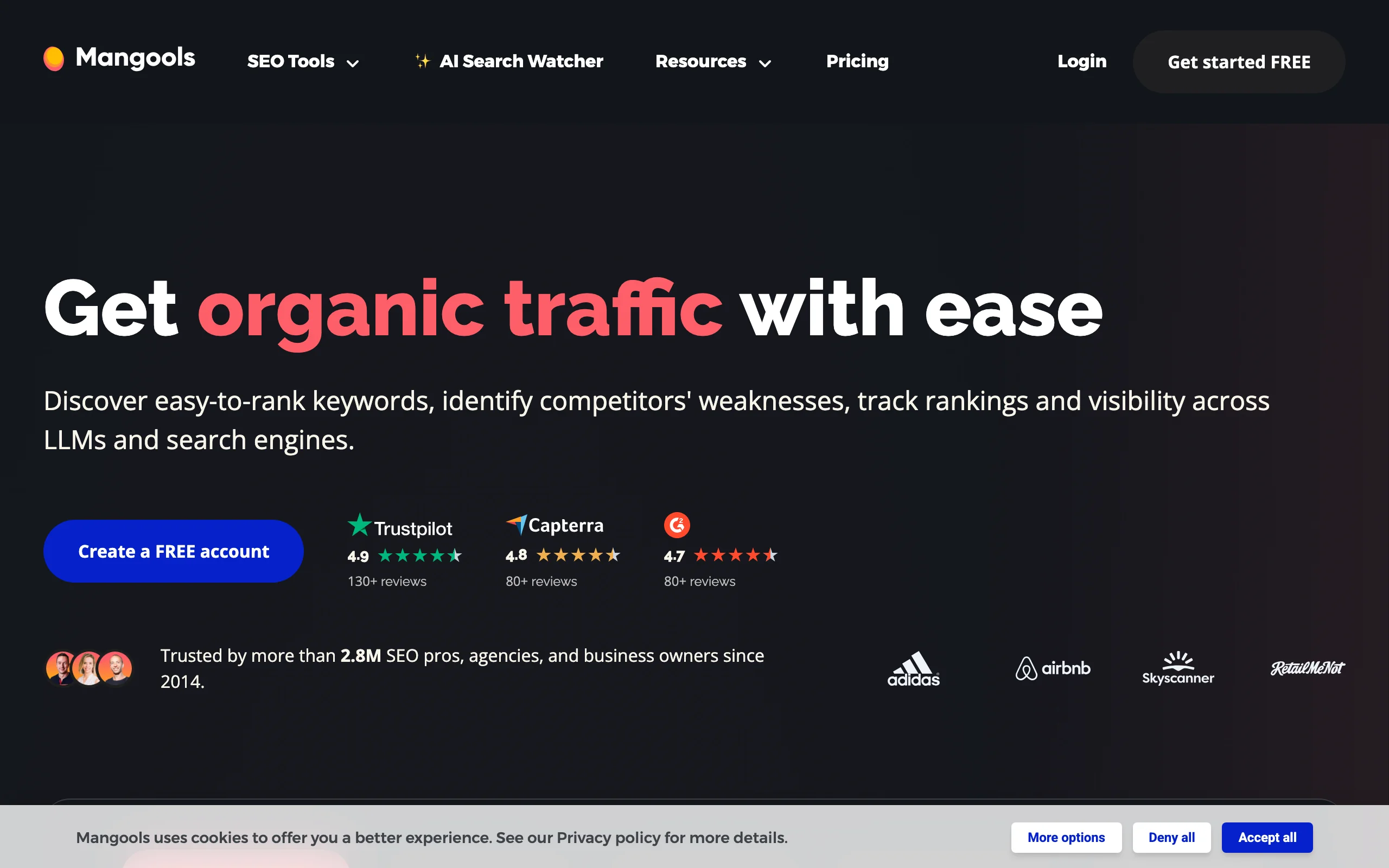 AI Citation Tracking Tool: Mangools AI Search Watcher
Best for: SEO practitioners already using the Mangools suite
Mangools is best known for KWFinder and SERPChecker. AI Search Watcher is its standalone LLM tracker, a natural add for SEO teams who want AI citation tracking without a new vendor.
Key features:
- Mention tracking across ChatGPT, Google AI Overviews, Gemini, Claude, Grok, Mistral, and Llama (Perplexity not covered)
- Integration with existing Mangools keyword lists and project structure
- SERP + AI side-by-side view: see whether you rank traditionally and are cited in AI for the same query
- Historical citation data going back to the tool's launch
- Familiar Mangools UI for existing subscribers
What it does well: the tie-in with traditional SEO data. Seeing your organic ranking position next to your AI citation rate for the same keyword, in one view, surfaces divergences: queries where you rank well but are never cited, or where you're cited despite not ranking on page one.
Limitations: confirmed live that Perplexity is still not tracked in AI Search Watcher (Mangools covers Perplexity only in its separate, free, one-off AI Search Grader snapshot tool). AI Search Watcher is also a younger product than the dedicated AI monitoring platforms above, which shows in feature depth.
Pricing: a standalone Mangools product with Basic, Premium, and Agency tiers; Mangools' pricing page is behind a plan selector, confirm current rate at mangools.com before purchase.
5. Chatbeat
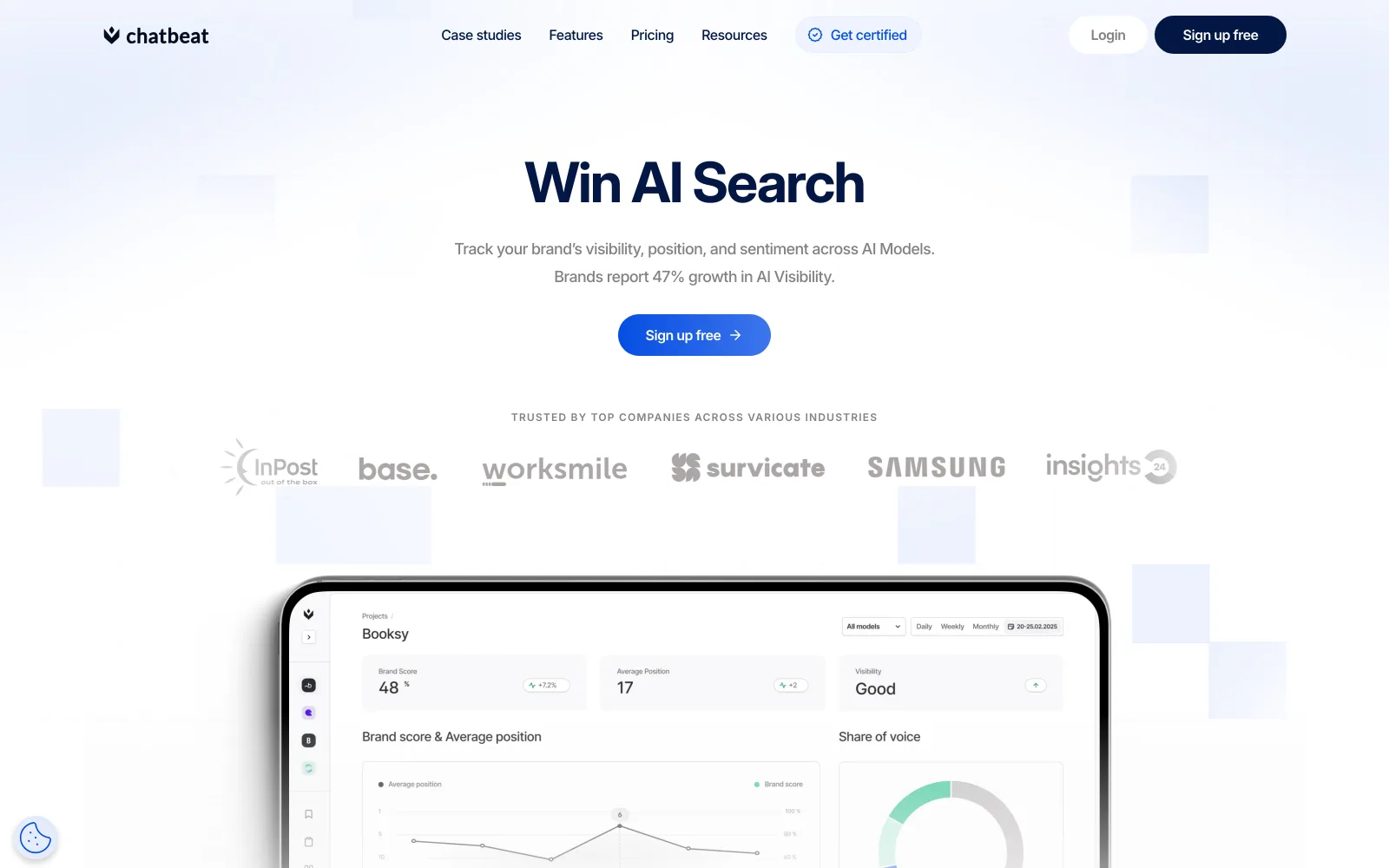 AI Citation Tracking Tool: Chatbeat
Best for: teams tracking brand visibility across ChatGPT, Gemini, and Perplexity together
Chatbeat has moved since its last review here. Its old domain, chatbeat.ai, is no longer live, it is now a parked auction listing on Namecheap. The product is live at chatbeat.com, and its platform coverage has changed along with the domain: it now tracks ChatGPT, Gemini, and Perplexity, not the ChatGPT/Claude/Copilot chat-native lineup it covered previously. Claude and Copilot are no longer part of its tracked platform set.
Key features (per chatbeat.com, confirmed live September 2026):
- Visibility tracking across ChatGPT, Gemini, and Perplexity
- Competitive visibility measurement and share of voice
- Suggested prompts discovery
- Key sources analysis
- Sentiment analysis
- Recommended actions based on tracked gaps
What it does well: the pivot toward Gemini and Perplexity puts it closer to search-style AI coverage than its earlier chat-only positioning, useful if your buyers research through AI Overviews or Perplexity rather than pure chat interfaces.
Limitations: no Claude or Copilot coverage as of this review, a real gap if your buyers use either. Chatbeat's pricing was not published as static content at the time of this check; confirm current tiers directly on chatbeat.com before buying, and use the live URL, not chatbeat.ai, which is dead.
Pricing: a 10-day free trial is advertised on-site; contact Chatbeat directly for current subscription pricing.
6. AY Rank AI Visibility Checker + Entity Analyzer (free)
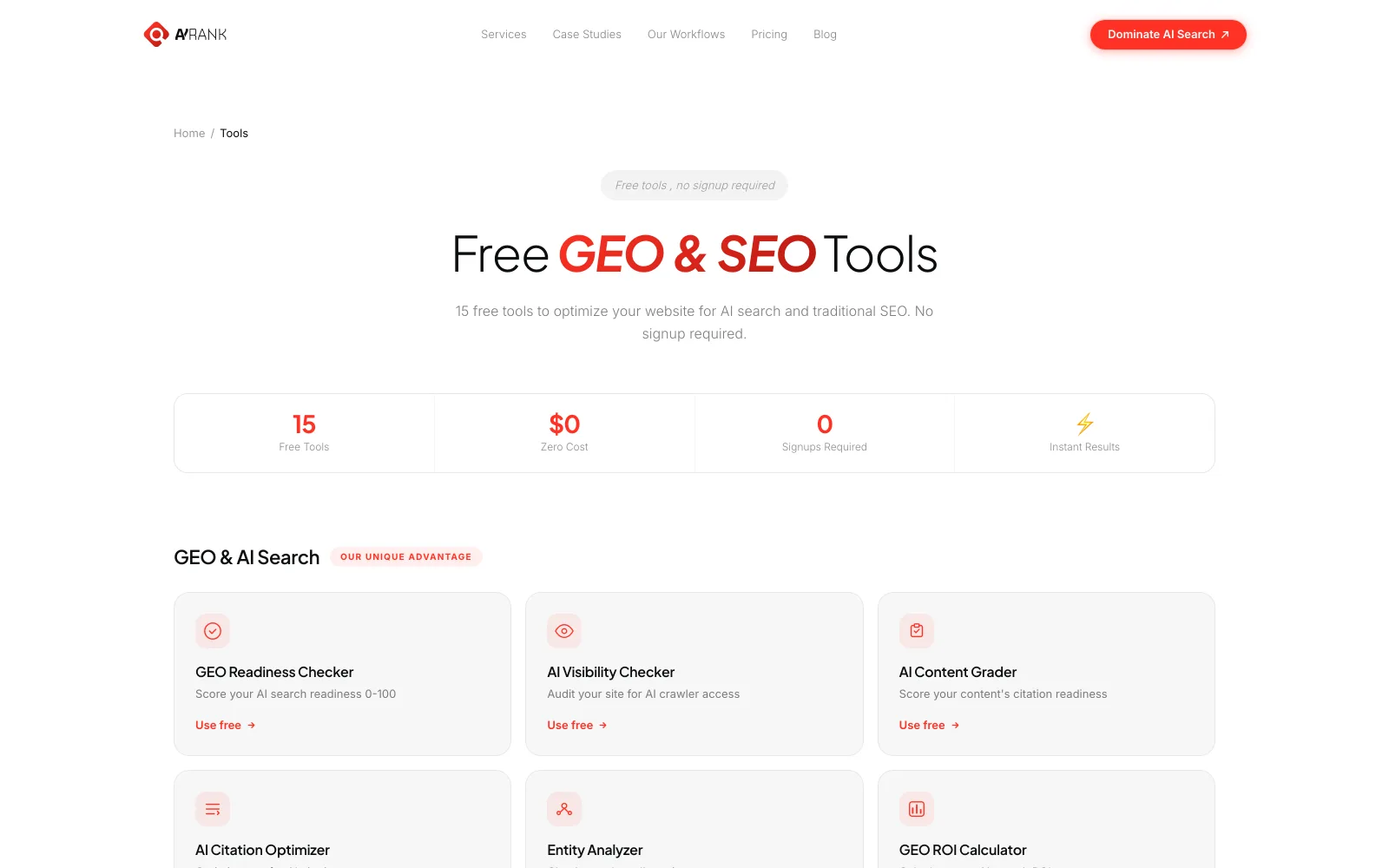 AI Citation Tracking Tool: AY Rank AI Visibility Checker
Best for: a free AI-readiness baseline before you pay for citation tracking
Neither of these two free tools is a citation tracker. They don't run your queries through ChatGPT, Perplexity, or Gemini, and they don't report a citation rate. They answer the question that comes before tracking: is your site technically ready to be cited at all?
AI Visibility Checker: enter your URL and it checks whether AI crawlers (GPTBot, PerplexityBot, ClaudeBot, Google-Extended) can access your site, scans robots.txt, and evaluates structured data, meta tags, and content structure, then returns a GEO readiness score with prioritized fixes. Free, no signup.
Entity Analyzer: assesses how well-defined your brand is as a structured entity in AI knowledge systems, since entity clarity is one of the strongest predictors of AI citation frequency. It audits Wikipedia/Wikidata presence and Knowledge Panel status, brand consistency across directories, structured data quality (Organization and FAQ schema, llms.txt), and authority signals like author bios and reviews.
What it does well: most teams starting a GEO program need to answer two questions first: can AI engines crawl and understand our site, and is our brand a clearly defined entity? These two tools answer both. For "are we actually being cited," you need one of the five paid trackers above.
Limitations: audits, not trackers. No query running, no citation rate, no competitor benchmarking, no trend data.
Pricing: free. Get started with the AY Rank AI Visibility Checker →
Related: for the full strategy behind improving AI citations, read What is Generative Engine Optimization (GEO)?
How do I evaluate citation tracking and monitoring solutions?
Score candidates against five criteria: platform coverage (does it track every AI surface your buyers use?), query flexibility (can you segment by intent and persona?), competitor benchmarking (share of voice, not just your own rate), source URL attribution (which pages earn the citations), and alerting (do you find out about displacement before pipeline feels it?). Then match to your stage:
- Just starting, no budget yet: free AY Rank AI Visibility Checker and Entity Analyzer. They won't track citations, but they expose the crawler-access, schema, and entity gaps that keep brands out of AI answers in the first place.
- Already on Mangools: AI Search Watcher, the lowest-friction entry point, no new vendor.
- Marketing team, want it simple: Otterly.AI, the best out-of-the-box experience with sentiment and alerts.
- Need to prove revenue impact: AIclicks, the only tool here that bridges citation data and traffic/conversion attribution.
- Buyers research via ChatGPT, Gemini, or Perplexity: Chatbeat, now covering that specific mix.
- Agency or enterprise, need maximum coverage: LLMrefs, the most complete option for platform breadth, benchmarking, and white-label reporting.
Beyond tracking: what to do with your citation data
Citation tracking is a measurement tool, not a strategy. Once you have data, the work looks like this:
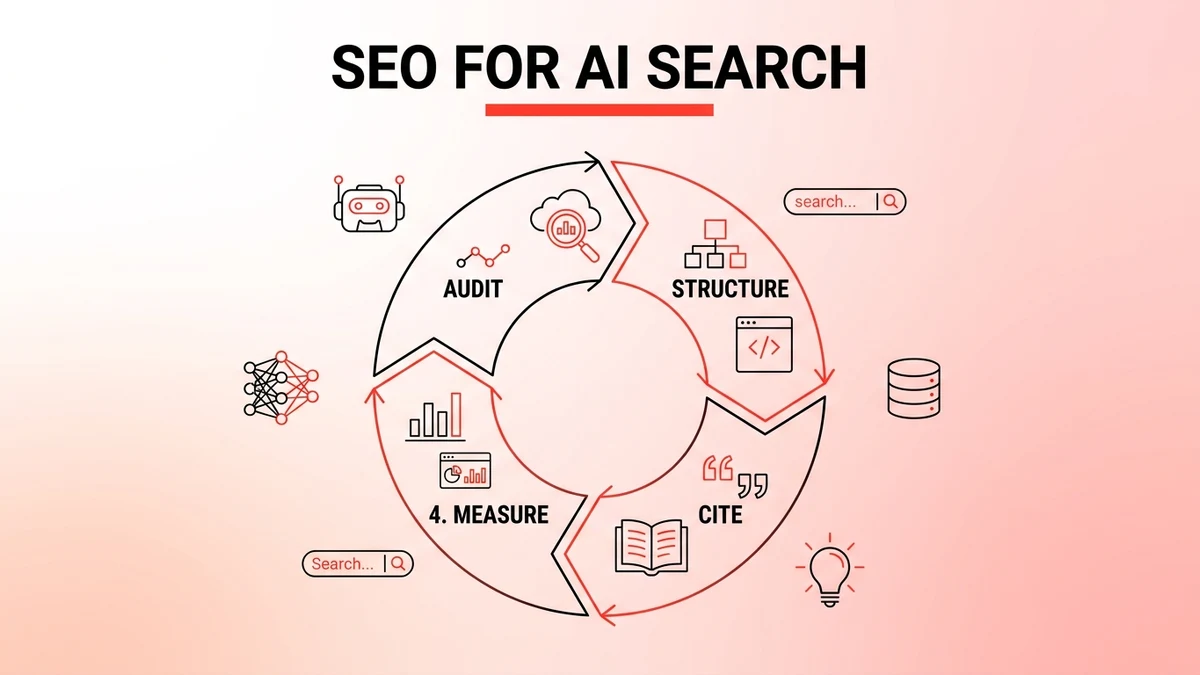
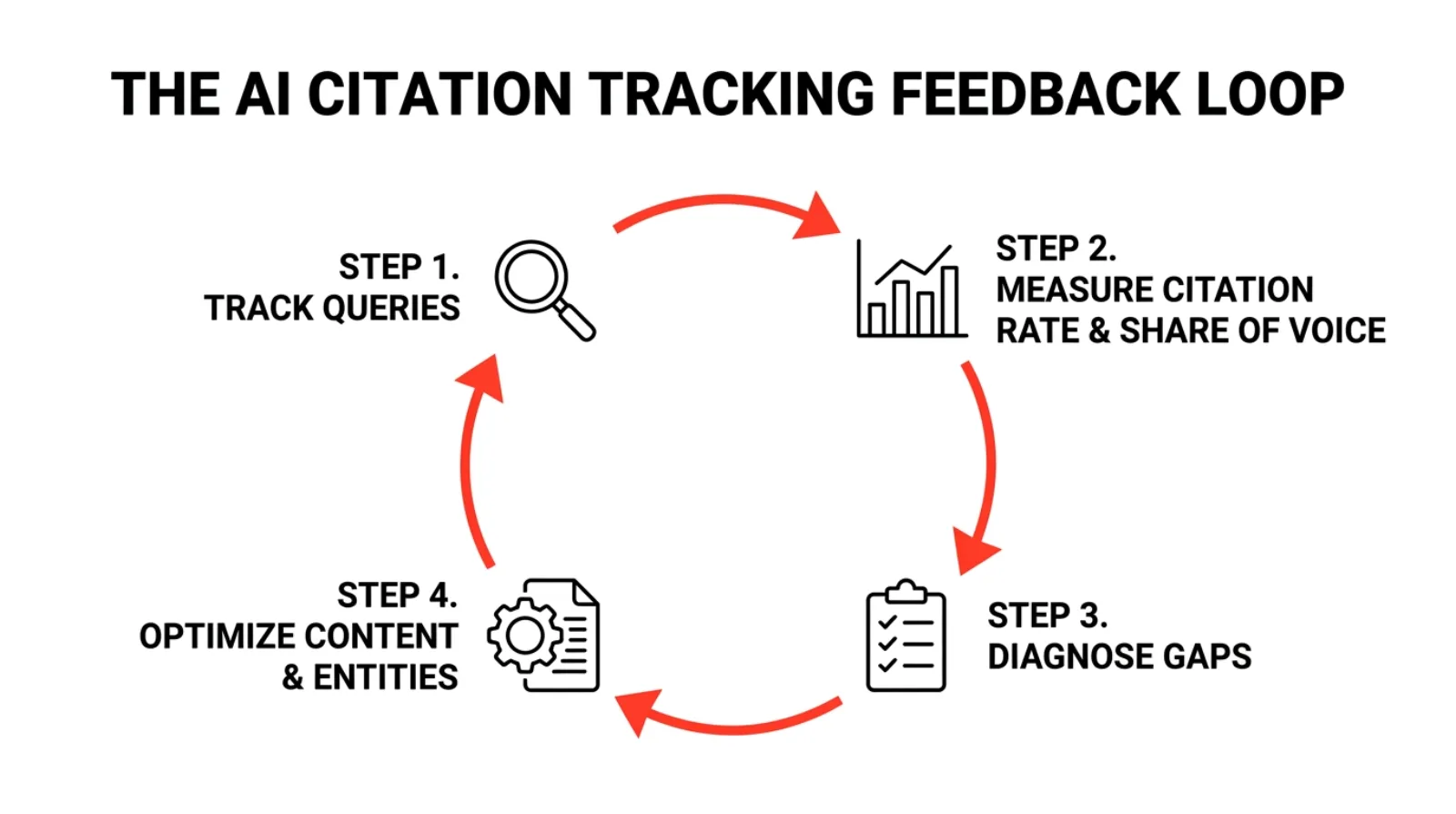 The AI citation tracking feedback loop: track queries, measure citation rate and share of voice, diagnose gaps, optimize content and entities
Step 1: sort gaps by query intent. Group your tracked queries by intent (informational, comparative, transactional) and find where your citation rate lags competitors most. Those are your highest-priority content opportunities.
Step 2: audit cited vs. uncited content. Look at which URLs get cited when you appear, and what they have in common: length, structure, use of statistics, schema markup, external links. Compare those to pages on topics where you're not cited.
Step 3: strengthen entity signals. If your Entity Analyzer score is low, prioritize entity work: complete and consistent Organization schema, Wikipedia/Wikidata presence, brand name consistency across directories, and a structured content cluster strategy.
Related: Entity SEO for AI search: how to make your brand undeniable to LLMs
Step 4: structure content the way AI systems retrieve it. Descriptive H2/H3 headings that match how questions are phrased, short quotable definitional sentences near the top of each section, data with source citations, FAQPage and HowTo schema where it fits, a clear author entity with real expertise signals.
Step 5: watch for competitor displacement. Set alerts for sudden citation rate drops. These usually trace to a competitor publishing strong new content or a model update that re-weighted source types. Catching them early means you respond before the drop compounds.
Related: GEO audit checklist · Or skip the DIY tooling: our daily AI citation tracking service runs this monitoring for you, with 24-hour drop alerts and competitor diffing.
FAQ
What are the best tools for monitoring citation rate?
LLMrefs (multi-platform depth, $79/mo), Otterly.AI (marketer-friendly, from $29/mo), AIclicks (traffic attribution, $59/mo), Mangools AI Search Watcher (SEO-suite integration, no Perplexity, from ~$16/mo), Chatbeat (ChatGPT/Gemini/Perplexity, contact for pricing), plus the free AY Rank AI Visibility Checker for a pre-tracking readiness audit. The right pick depends on platform coverage, budget, and whether you need competitor benchmarking or revenue attribution.
How do these platforms compare on citation rate performance?
LLMrefs and AIclicks report the most granular citation rate performance: LLMrefs per platform and per URL with trend charts, AIclicks tied to traffic and conversions. Otterly.AI reports one blended rate with sentiment tagging. Mangools gives a per-platform snapshot but skips Perplexity entirely, and Chatbeat now measures rate across ChatGPT, Gemini, and Perplexity rather than the chat-native set it tracked previously. The free AY Rank tools don't report a citation rate at all; they audit whether your site is technically ready to be cited in the first place.
What are the top options for citation rate reporting?
For output format, not just raw tracking: LLMrefs for white-label dashboards and per-URL trend exports, AIclicks for a revenue-facing ROI dashboard, Otterly.AI for digest emails and CSV export, Mangools for reporting inside an existing SEO dashboard, and Chatbeat for Slack/Teams alerts alongside its own dashboard.
What platforms provide comprehensive citation rate analytics?
LLMrefs covers the most ground: six or more AI platforms, per-URL source attribution, competitor share of voice, and trend charts in one dashboard. AIclicks adds traffic and revenue attribution across four core LLMs. Otterly.AI covers the analytics core, rate, sentiment, and alerts, across four platforms with an easier learning curve than either.
Which tools measure domain citation rate?
Tools with source URL attribution measure domain citation rate: how often AI platforms cite your domain, and which specific pages. LLMrefs and AIclicks both report per-URL citation data on paid plans. The free AY Rank AI Visibility Checker doesn't measure citation rate; it audits whether your domain is technically ready to be cited, the step before measuring.
What are the best AI citation tracking tools?
The same five paid tools above plus the two free AY Rank readiness tools: LLMrefs, Otterly.AI, AIclicks, Mangools AI Search Watcher, and Chatbeat cover the paid tracking category in 2026. Pricing ranges from roughly $16/month to $79/month for published tiers, plus free options for a pre-tracking audit.
What is AI citation tracking?
The process of monitoring whether and how your brand is mentioned in responses generated by AI platforms like ChatGPT, Perplexity, Gemini, Claude, and Google AI Overviews. It measures citation rate, context, sentiment, and which specific URLs get referenced, giving you a quantitative picture of your brand's AI search visibility.
How is AI citation tracking different from traditional rank tracking?
Traditional rank tracking reports your position (1 to 100) in a deterministic list of results for a keyword. AI citation tracking reports whether your brand appears in a generative, probabilistic answer that can differ every time it's produced. The metrics and methodology are different enough that dedicated tools exist for it (we document our own approach in our citation tracking methodology).
Why do only 11% of domains get cited by both ChatGPT and Perplexity?
Different platforms use different training data, retrieval mechanisms, and quality signals when deciding what to cite. A domain optimized for one platform's retrieval patterns may not meet another's criteria. Appearing consistently across the AI search ecosystem takes deliberate, multi-platform optimization, not just good SEO.
How often should I run citation tracking queries?
Weekly tracking is enough for most brands to spot trends and catch displacement events quickly. High-volume brands in competitive categories may want daily tracking. At minimum, run a baseline audit monthly so you have comparable data points over time.
Can I track AI citations for free?
Partially. Otterly.AI offers a free trial rather than a permanent free tier, Chatbeat offers a 10-day free trial, and Mangools' free AI Search Grader gives a one-off snapshot across eight models including Perplexity. The free AY Rank AI Visibility Checker isn't a citation tracker; it's an AI-readiness audit covering crawler access, schema, and content structure. Run it first, then pay for ongoing tracking once the readiness gaps are closed.
What should I do if my AI citation rate is dropping?
First, check whether a competitor recently published strong content on the same topics. Second, check for AI model updates that may have changed source preferences. Third, audit your key pages against content structure best practices for AI retrieval. Fourth, check your entity signals, inconsistent or incomplete entity data is one of the most common causes of declining citation rates.
Does appearing in AI citations drive actual traffic?
It depends on the platform. Perplexity and some AI Overviews configurations show clickable source links, which drive measurable referral traffic. ChatGPT's web browsing mode also cites sources with links. A significant share of AI citations are zero-click, though: the user gets the answer without visiting your site. Zero-click citations still carry brand value, they establish you as an authoritative source in the user's mind, which shapes consideration and conversion later.
Start tracking your AI citations today
Citation tracking gives you the feedback loop that turns GEO from a guess into a measurable, improvable discipline.
Start with the free AY Rank AI Visibility Checker to get your AI-readiness baseline in under 10 minutes, it tells you whether anything is blocking AI engines from citing you at all. Then pick one of the paid trackers above based on which of the five questions in this guide matters most to you: comparison, reporting output, analytics depth, ongoing monitoring, or domain-level attribution.
Continue reading: How to get your brand cited in ChatGPT and Perplexity | 7 best AI search monitoring tools | What is GEO? The complete guide | 6 best Perplexity SEO tracking tools
This post is part of our GEO Optimization guide. Related reading: Best GEO Agency for Healthcare, Best GEO Agencies, Best Entity Optimization Tools.

Adel tracks AI citation rates across ChatGPT, Perplexity, Gemini, and AI Overviews. He turns raw visibility data into actionable insights that guide our optimization strategy.
Full Bio →