Entity optimization is now the load-bearing layer of AI search. ChatGPT, Perplexity, Gemini, and Google AI Overviews do not match strings; they match entities in a knowledge graph. If your brand, products, people, and topics are not modelled as disambiguated entities with clean relationships to Wikidata, Google's Knowledge Graph, and schema.org, AI engines simply cannot cite you with confidence.
The right tooling closes that gap. The wrong tooling generates schema and stops there. In this guide we compare the seven best entity optimization tools for 2026, with pricing, knowledge graph coverage, disambiguation depth, and a framework to pick the one that fits your technical SEO stack.
TL;DR: for full-stack entity SEO, InLinks and WordLift remain the strongest end-to-end platforms in 2026; if you only need AI citation tracking tied to entity coverage, Profound and AthenaHQ are the better lightweight picks.
Best entity optimization tools: a brief overview
- InLinks: Best overall entity SEO platform: automates entity-based internal linking, schema, and knowledge graph mapping in one workspace.
- WordLift: Best for publishers and content-heavy sites: turns articles into a private knowledge graph with Wikidata reconciliation.
- Schema App: Best for enterprise schema and entity graphs: connects every page to a managed entity graph stored in a triple store.
- Diffbot: Best knowledge graph data source: the largest commercial knowledge graph with an API for entity extraction at scale.
- Profound: Best for tying entities to AI citation share: tracks how your entities show up across ChatGPT, Perplexity, Gemini, and AI Overviews.
- AthenaHQ: Best lightweight brand entity tracker: monitors brand entity mentions and sentiment in LLM answers.
- Brandwatch Consumer Intelligence: Best for enterprise brand entity intelligence: ties entity mentions to social listening and PR signals.
| Tool name | Key strength | Pricing | Platforms |
|---|---|---|---|
| InLinks | Entity-based internal linking and schema automation | From $49/month; 14-day trial | Web, WordPress plugin, API |
| WordLift | Wikidata reconciliation and private knowledge graph | From $59/month; 14-day trial | Web, WordPress, API, Cloudflare Worker |
| Schema App | Managed entity graph in a triple store for enterprise | From $500/month; custom enterprise pricing | Web, API, JS injector |
| Diffbot | Largest commercial knowledge graph with entity extraction API | From $299/month; free trial credits | API, Web |
| Profound | Entity-level AI citation tracking across major engines | From $499/month; custom plans | Web, API, Slack |
| AthenaHQ | Lightweight brand entity tracking in LLM answers | From $99/month; free trial | Web |
| Brandwatch | Enterprise brand entity intelligence with social signals | Custom enterprise pricing | Web, API |
1. InLinks, best overall entity SEO platform
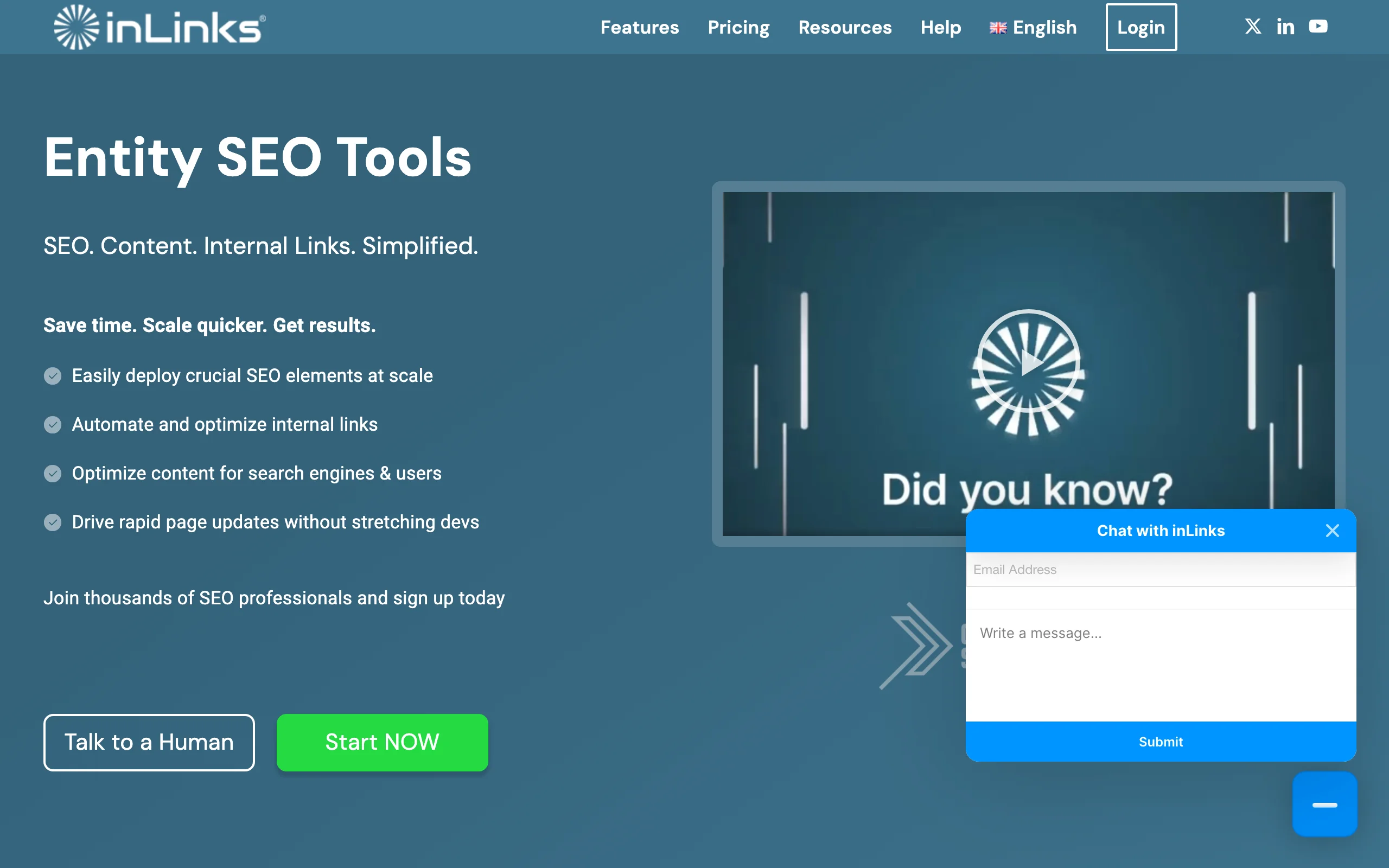 Entity Optimization Tools with InLinks
InLinks is an entity SEO platform that maps content to a knowledge graph, then automates internal linking, schema markup, and topic coverage based on that graph. Where most SEO tools work at the keyword level, InLinks works at the entity level: it identifies the topics on each page, links them to canonical entities, and surfaces coverage gaps against your competitors' entity sets.
It is the closest thing to a one-stop entity optimization workspace. In-house SEO teams use it to plan content briefs around entity coverage, deploy JSON-LD without touching the CMS, and run internal linking that reinforces topical authority instead of random anchor text.
Key features
- Automated entity-based internal linking with anchor variation
- JSON-LD schema generation tied to entity graph (Article, Product, Organization, Person, FAQ)
- Topic clustering and entity coverage gap analysis vs competitors
- WordPress, Shopify, and JS injector deployment
- Multi-language entity graph support
- Built-in content briefs with required entities and questions
Best for
- In-house SEO teams running content programmes that need topical authority for AI search
- Mid-market brands that want entity work without hiring a knowledge graph engineer
- Agencies managing multiple client sites from one workspace
Pricing
- 14-day free trial
- Paid plans start at $49 per month for small sites; scales by managed pages
- Agency and enterprise plans with multi-site management
Pros
- Single workspace for entities, schema, and internal links removes three separate tools
- Deployment via JS injector means no developer ticket for schema or links
- Topic clustering ties directly to entity coverage, which AI engines reward when generating answers
Cons
- Knowledge graph is proprietary, not as deep as Diffbot for non-English entities
- Pricing scales by managed pages, which gets expensive on very large sites
2. WordLift, best for publishers and content-heavy sites
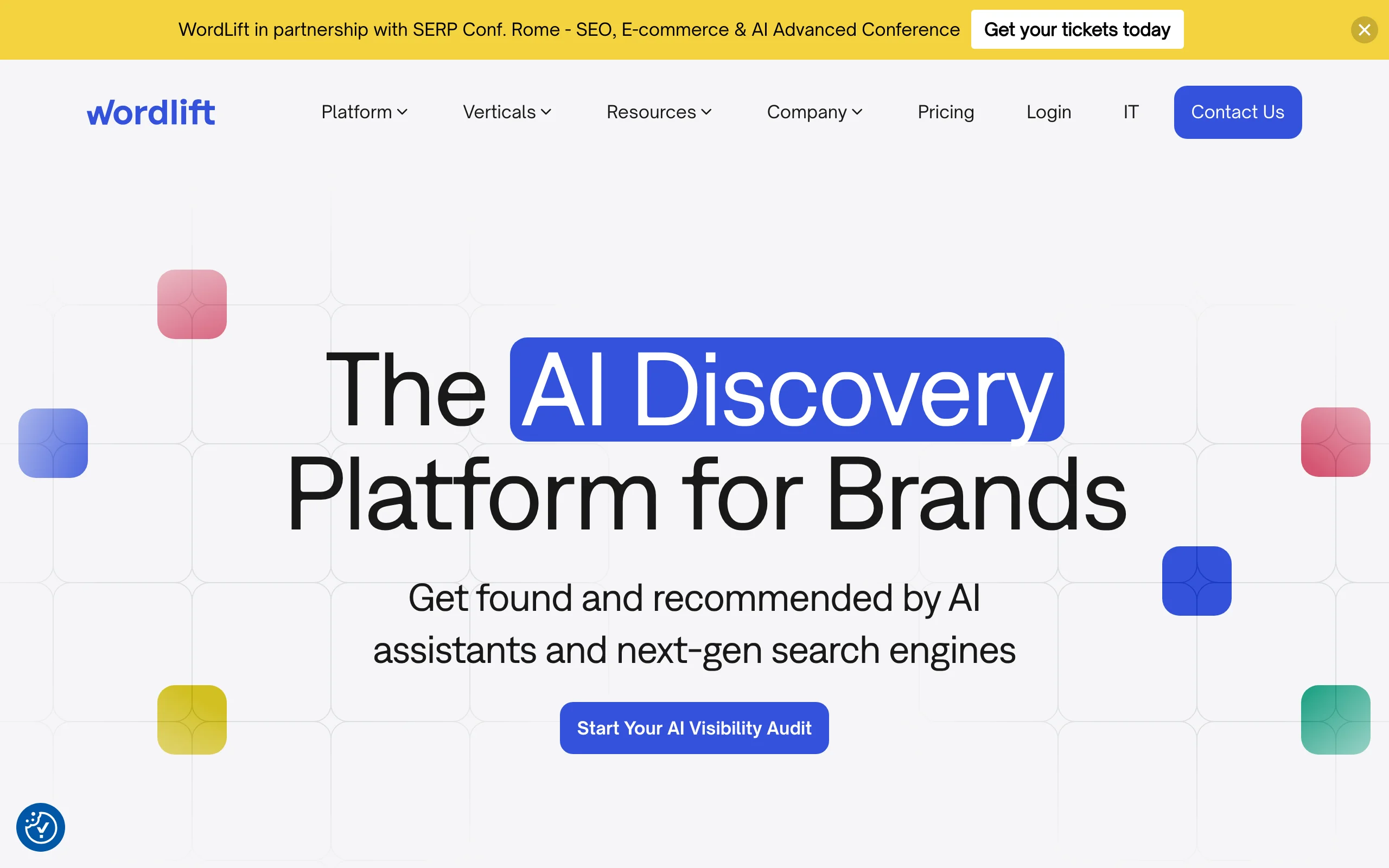 Entity Optimization Tools with WordLift
WordLift is an entity optimization tool that turns your content into a private knowledge graph reconciled against Wikidata, DBpedia, and Google's Knowledge Graph. It plugs into WordPress and headless CMSs, extracts entities from each article, lets editors curate them, and publishes structured data plus a navigable knowledge graph endpoint that AI engines can crawl.
Publishers and content teams use WordLift because it treats every article, author, product, and event as a first-class entity. The result is a site whose graph an LLM can traverse with confidence, citing specific entities rather than fuzzy keyword matches.
Key features
- Wikidata, DBpedia, and Google Knowledge Graph entity reconciliation
- Private knowledge graph hosted on your subdomain (queryable via SPARQL)
- WordPress, Drupal, and headless CMS integrations
- Automatic JSON-LD for Article, NewsArticle, Recipe, Product, Person, Organization
- Cloudflare Worker for edge-injected structured data
- AI-powered content recommendations based on graph traversal
Best for
- News publishers, magazines, and content-heavy brands that publish weekly or daily
- Teams already on WordPress that want a Wikidata SEO tool without leaving the CMS
- Organizations whose authority depends on people and product entities, not just pages
Pricing
- 14-day free trial
- Paid plans start at $59 per month for small sites
- Business and enterprise plans for high-volume publishers
Pros
- One of the few tools that publishes a real, queryable knowledge graph endpoint
- Strong Wikidata reconciliation, which matters when ChatGPT and Gemini lift entity facts
- WordPress integration is mature, with editor-friendly entity curation
Cons
- Best value sits inside WordPress, so headless or custom stacks need more configuration
- Editor learning curve when teams have never worked with entities before
3. Schema App, best for enterprise schema and entity graphs
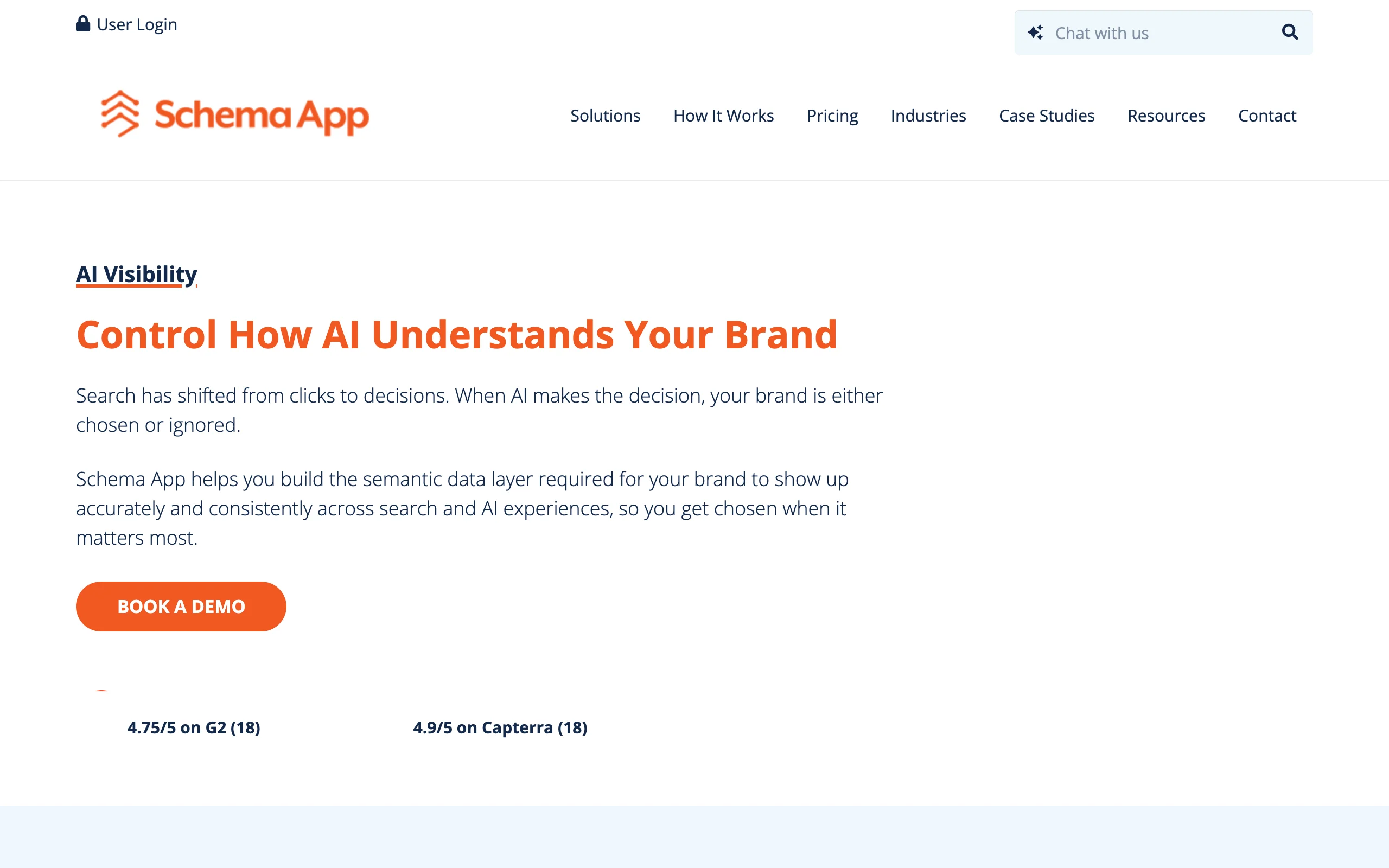 Entity Optimization Tools with Schema App
Schema App is an enterprise schema and entity graph platform that connects every page on your site to a managed entity graph stored in a dedicated triple store. It is built for organizations that want structured data treated as a system of record, not a one-off plugin output.
Large brands use it because Schema App keeps the entity graph versioned, queryable, and updatable independently of the CMS. When a product, person, or location changes, the entity updates everywhere it is referenced, and the change propagates to all schema markup across the site.
Key features
- Managed triple store hosting your full entity graph
- Schema markup deployment via JS injector with no CMS code changes
- Full schema.org coverage including Product, FAQPage, HowTo, Event, LocalBusiness
- Entity relationship mapping across pages and properties
- Integration with Google Search Console for rich result tracking
- Multi-domain and multi-language support
Best for
- Enterprise brands with thousands of pages and complex product, location, or people entities
- Technical SEO teams that want schema treated as infrastructure
- Organizations whose CMS makes adding schema slow or expensive
Pricing
- Demos available, no public free tier
- Plans start around $500 per month for mid-market accounts
- Enterprise pricing custom, typically annual contracts
Pros
- The most rigorous entity graph and schema deployment in the category
- JS injection means SEO teams ship structured data without engineering tickets
- Entity changes propagate everywhere, removing the drift problem most sites have
Cons
- Pricing puts it out of reach for SMBs and most early-stage brands
- Heavier setup than plugin-based tools, with proper onboarding required
4. Diffbot, best knowledge graph data source
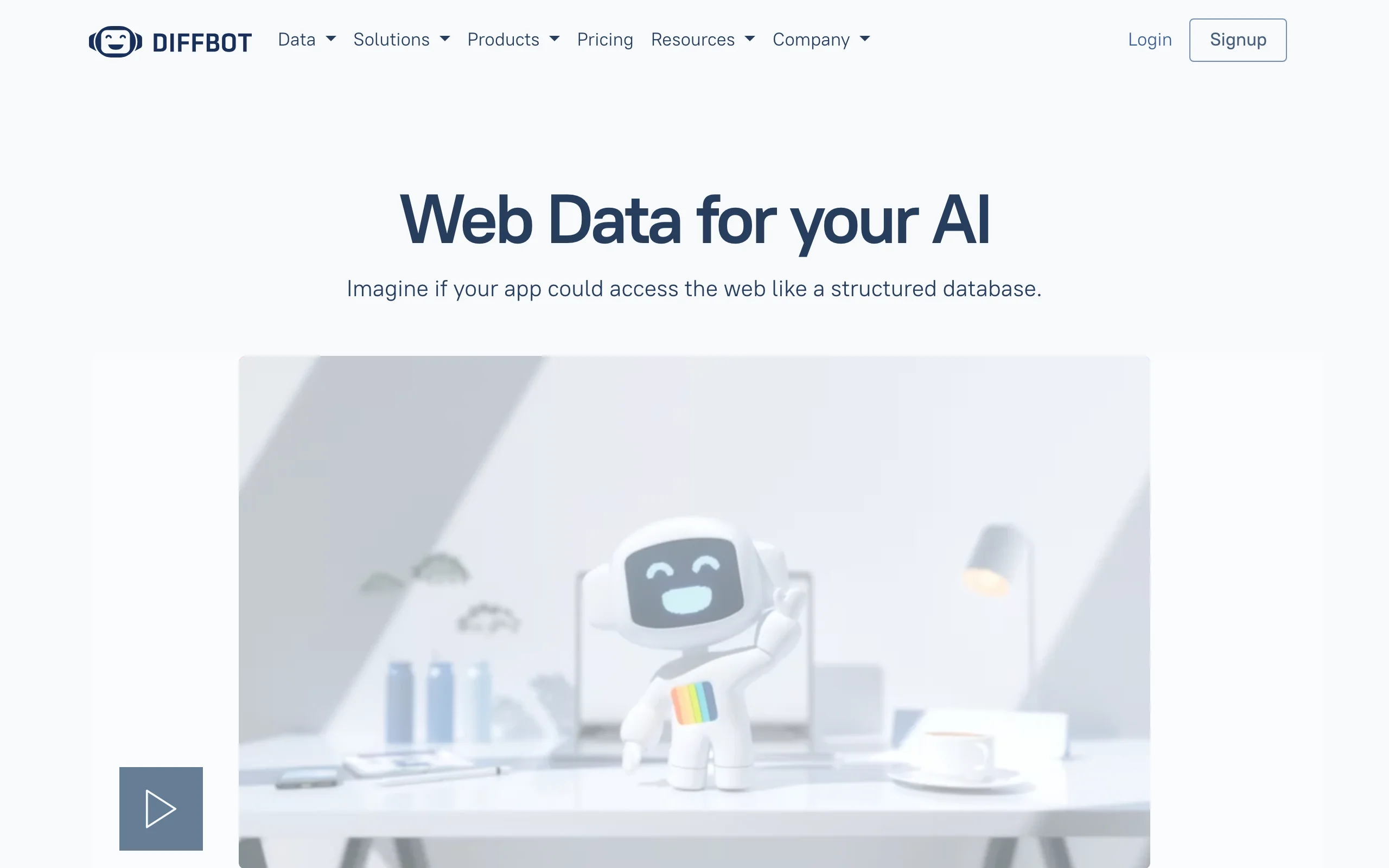 Entity Optimization Tools with Diffbot
Diffbot operates one of the largest commercial knowledge graphs in the world, with billions of entities extracted from the public web using its own crawl and AI extraction pipeline. For entity optimization, Diffbot is less a publishing tool and more a data layer: an API that returns the canonical entity record for any URL, person, organization, product, or article.
Technical SEO teams use Diffbot to audit their own entity coverage, enrich internal entity records, and build custom knowledge graph optimization tools on top of its API. If you need disambiguation at scale, especially for global brands and non-English entities, this is the deepest commercial source available.
Key features
- Knowledge graph with billions of entities (organizations, people, products, articles, places)
- Entity extraction API for URLs and raw text
- Natural Language API for entity disambiguation and relationship extraction
- Custom enhance API for enriching your CRM or product catalog
- Bulk export and SQL-like Diffbot Query Language
- Sentiment, role, and fact extraction
Best for
- Technical SEO and data teams building custom entity tooling
- Brands operating globally that need non-English entity disambiguation
- Engineering teams enriching internal records with public entity data
Pricing
- Free trial with API credits
- Startup plans from $299 per month
- Enterprise volume pricing for high-throughput API access
Pros
- Deepest commercial entity graph available, including long-tail and international entities
- API-first design fits engineering workflows and custom GEO pipelines
- Disambiguation quality is consistently strong, especially for organizations and people
Cons
- Not a turnkey schema or internal linking deployment platform
- Requires engineering bandwidth to integrate, not a buy-and-go SEO tool
5. Profound, best for tying entities to AI citation share
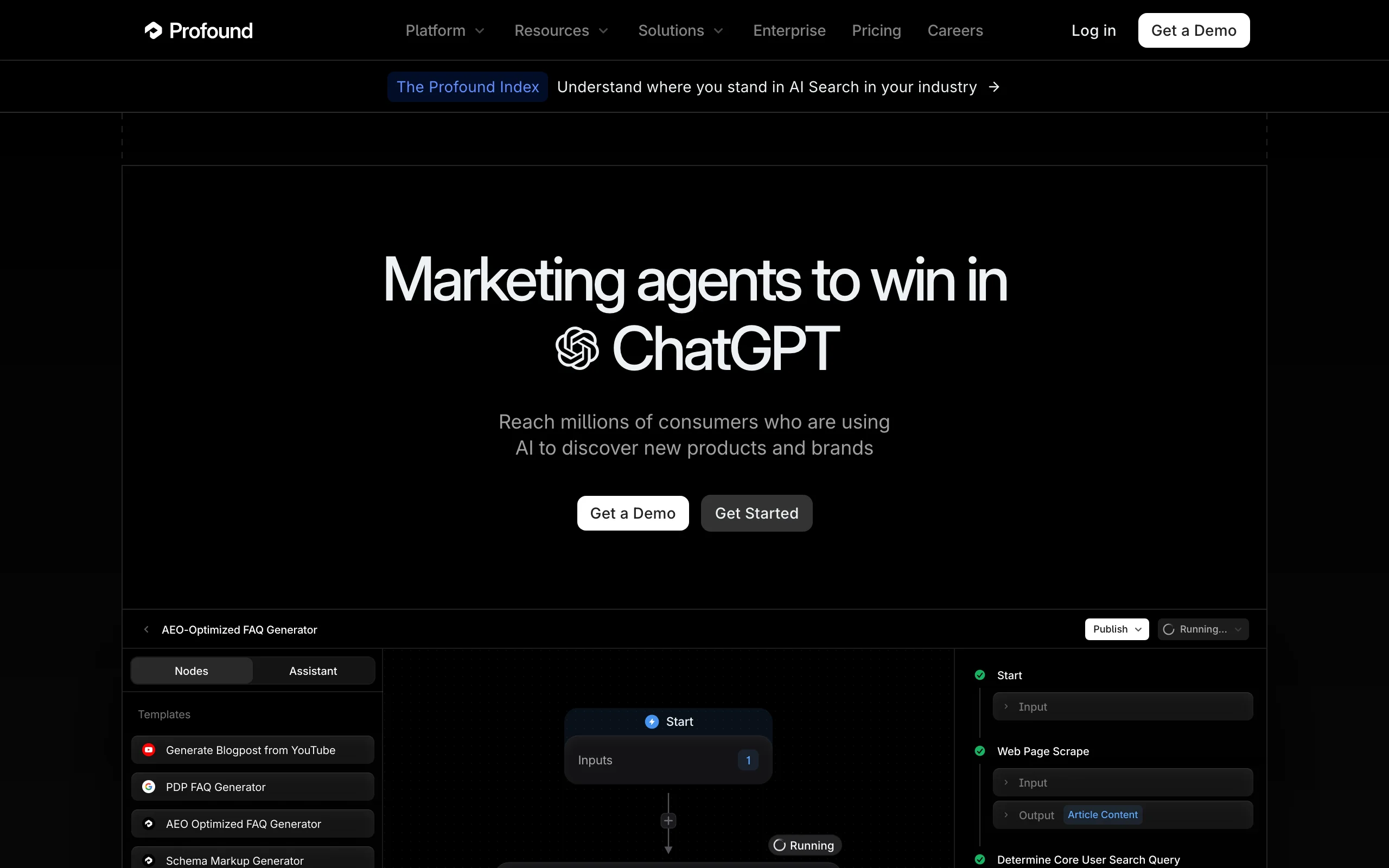 Entity Optimization Tools with Profound
Profound is an AI search analytics platform that tracks how your brand and product entities appear across ChatGPT, Perplexity, Gemini, Claude, and Google AI Overviews. Where InLinks and WordLift help you publish entity data, Profound measures whether AI engines are actually picking it up.
The reason to put it in an entity tooling stack is simple: entity work without measurement is faith. Profound resolves your brand entity, monitors share of voice across hundreds of prompts, and shows which competing entities are being cited instead of yours. It is the feedback loop on the rest of the stack.
Key features
- Multi-engine tracking across ChatGPT, Perplexity, Gemini, Claude, and AI Overviews
- Brand entity share of voice and competitor entity benchmarking
- Prompt-level citation tracking with source attribution
- Daily refresh on prompts you define
- Slack and API integrations for alerts and dashboards
- Custom topic and persona clusters
Best for
- Mid-market and enterprise SEO teams running structured AI search programmes
- Heads of marketing who need executive reporting on AI visibility
- Brands whose entity work is mature and need to validate citation outcomes
Pricing
- Demo and pilot available
- Plans typically start around $499 per month
- Enterprise pricing for multi-brand and high-prompt volume
Pros
- One of the few platforms tracking entity-level citations rather than only string matches
- Multi-engine coverage in a single dashboard saves separate trackers
- Reporting is built for executive consumption, useful for SEO leads defending budget
Cons
- Not an on-page optimization tool; it tells you what to fix but does not fix it
- Pricing assumes a serious GEO programme, overkill for very small teams
6. AthenaHQ, best lightweight brand entity tracker
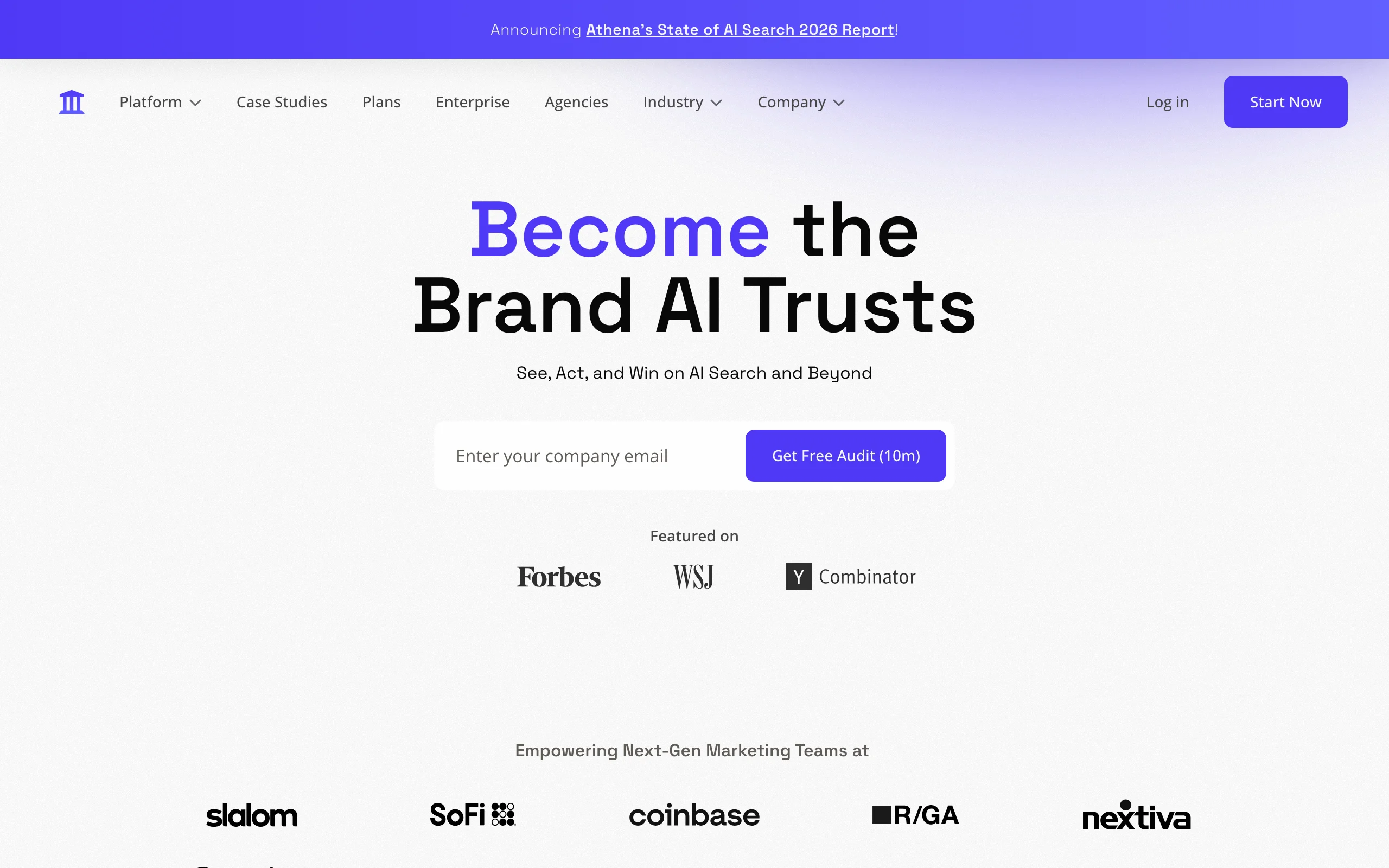 Entity Optimization Tools with AthenaHQ
AthenaHQ is a lightweight brand entity tracker that watches how your company, products, and people are mentioned across major LLMs. It does not publish schema or build a graph; it tells you which prompts surface your brand entity, what sentiment carries each mention, and which competing entities co-occur in the same answers.
SMB marketing teams and early-stage GEO programmes use AthenaHQ because it gives the entity tracking feedback loop without the price tag of a full platform. The trade-off is depth: simpler reporting, fewer engines, less granular prompt management.
Key features
- Brand entity mention tracking in ChatGPT and Perplexity (Gemini coverage varies)
- Sentiment analysis on entity mentions
- Competitor entity comparison
- Prompt library with categorization
- Weekly digest reports
- API access on higher tiers
Best for
- SMBs and early-stage brands starting an entity tracking practice
- Marketing teams that need a basic LLM feedback loop without enterprise pricing
- Founders who want to know if their brand is being mentioned in AI answers
Pricing
- Free trial available
- Paid plans typically start around $99 per month
- Higher tiers for API and multi-brand access
Pros
- Accessible entry point into AI entity tracking
- Sentiment analysis is useful for spotting reputation issues early
- Reasonable for a marketing manager to set up without engineering help
Cons
- Engine coverage is narrower than Profound or Brandwatch
- Reporting depth is limited compared with enterprise platforms
7. Brandwatch Consumer Intelligence, best for enterprise brand entity intelligence
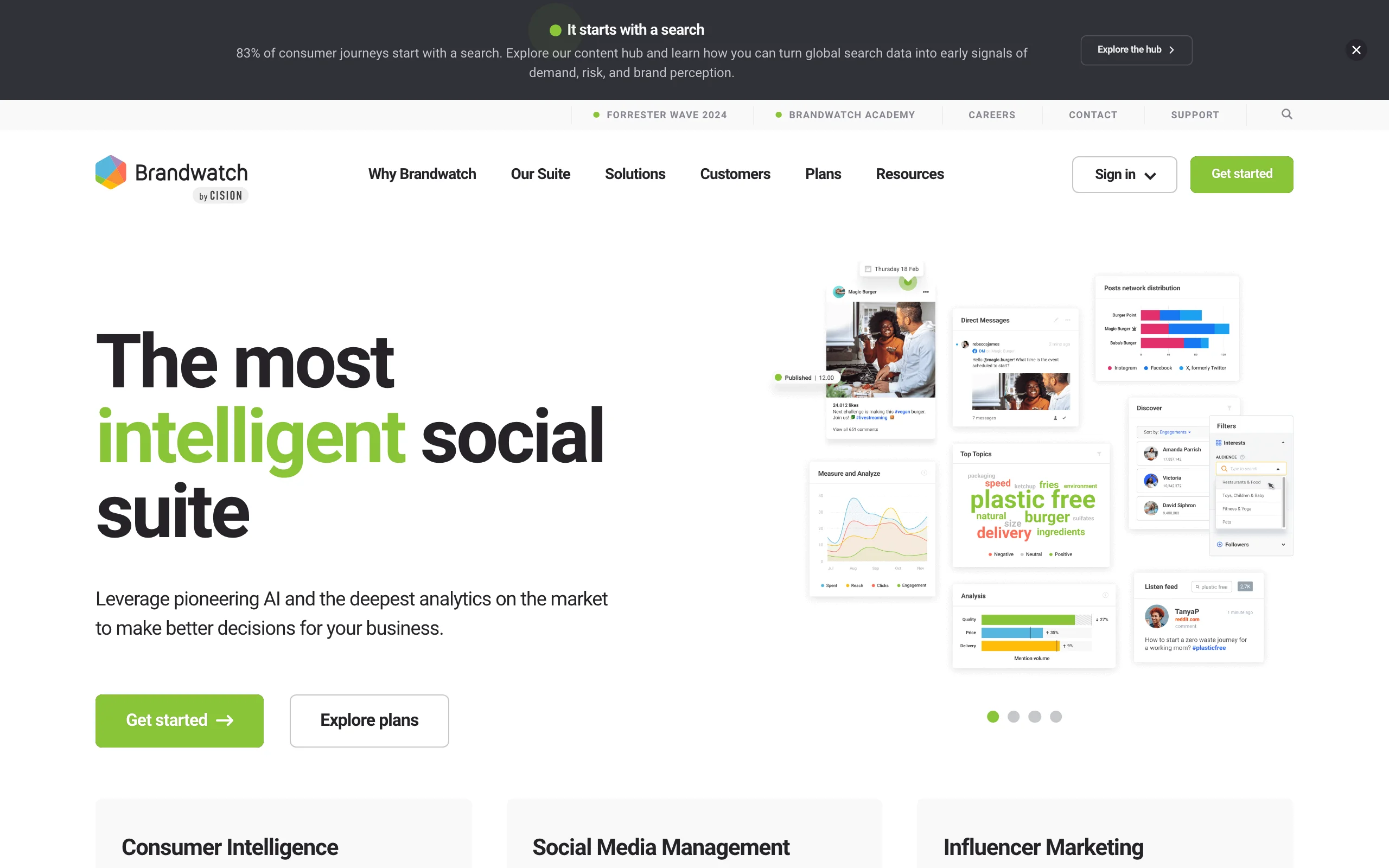 Entity Optimization Tools with Brandwatch
Brandwatch Consumer Intelligence (the platform Cision now markets across PR, social, and AI listening) is an enterprise brand entity intelligence tool that ties entity mentions to social listening, PR, and increasingly AI search signals. It treats your brand as a single entity tracked across every public surface where it can be mentioned.
Large brands use Brandwatch because their entity story does not start and end with AI engines. Reviews, news, social, forums, and AI answers all feed the same entity perception, and Brandwatch ingests them into one workspace. For pure GEO work it is overkill, but for brands where AI mentions are one channel among many, it consolidates the picture.
Key features
- Entity-level brand mention tracking across social, news, forums, reviews
- Emerging AI search and LLM citation tracking modules
- Sentiment, demographics, and influencer attribution per entity
- Custom dashboards for brand, product, and competitor entities
- Crisis alerting tied to entity mention velocity
- Enterprise integrations (Salesforce, Tableau, Sprinklr)
Best for
- Enterprise brands with mature PR and social listening programmes
- Comms and brand teams that need entity intelligence beyond SEO
- Organizations where AI search is one channel in a larger brand strategy
Pricing
- No public pricing; custom enterprise plans only
- Typically annual contracts in the five to six figure range
Pros
- Unmatched breadth of channels feeding one entity view
- Enterprise integrations and governance suit large comms and brand teams
- Crisis alerting catches entity-level reputation shifts quickly
Cons
- Overkill and overpriced for teams focused only on SEO and GEO
- AI search modules are newer and less deep than dedicated GEO tools like Profound
How to choose the best entity optimization tool for your needs
Entity optimization software is a stack, not a single tool. The right combination depends on whether you need to publish entities, measure them, or both, and how mature your knowledge graph optimization programme is. Here are the four decisions that matter.
1) Publish entity data or measure entity citations
Some tools generate and deploy entity data (schema, internal links, knowledge graphs). Others measure how AI engines treat those entities. You usually need both.
- If you need publishing: start with InLinks (mid-market) or Schema App (enterprise). Add WordLift if you are publisher-heavy on WordPress.
- If you need measurement: start with Profound for serious programmes, AthenaHQ for lightweight tracking, or Brandwatch for full brand intelligence.
- If you are running a programme: pair InLinks or Schema App with Profound. Use our entity analyzer to audit current entity coverage before committing.
2) Wikidata and Google Knowledge Graph reconciliation depth
Not every tool reconciles entities to public graphs. If your brand depends on showing up in AI answers about your industry, you want explicit Wikidata and Knowledge Graph links.
- For strong public graph reconciliation: WordLift is the leader, followed by Diffbot for API-driven workflows.
- For private graph deployment only: Schema App and InLinks work, but you will not benefit from public graph signals unless you reconcile separately.
- Wikidata SEO tool buyers should default to WordLift unless they need API-only access, in which case Diffbot.
3) Engineering bandwidth and CMS reality
Entity tooling sits across SEO, content, and engineering. The right pick depends on who can actually deploy it.
- No engineering capacity: InLinks or WordLift, both deploy via plugin or JS injection.
- Some engineering capacity: Schema App for JS injection, or Diffbot if you are willing to integrate an API.
- Strong engineering team: Diffbot plus a custom pipeline against your CMS, with Profound layered on top for measurement.
4) Programme stage and budget
Tooling without strategy stalls. Match the platform to your maturity, not your ambition.
- Early stage, under $300/month total stack: AthenaHQ for tracking, schema generators for publishing, audit work to identify the first 50 entities to fix.
- Mid stage, $500-$2,000/month: InLinks or WordLift plus Profound, with internal capacity to act on what they surface.
- Enterprise, $2,000+/month: Schema App plus Profound or Brandwatch, integrated with the rest of the marketing stack.
Run a four-week pilot before committing to any annual contract. Track 30 to 50 buyer-intent prompts, measure entity citation baseline, deploy on a slice of the site, and remeasure. The decision then makes itself.
If you have picked your entity optimization software but want a partner to actually run the GEO programme behind it (entity architecture, authority deployment, and ongoing citation work across ChatGPT, Perplexity, Gemini, and AI Overviews) that is what AY Rank does. We help B2B brands go from invisible to consistently cited in AI answers. The same approach is detailed in our entity optimization playbook, with the deployment patterns we use across AI SEO and technical SEO engagements. Book a free AI ranking audit to see where your brand currently shows up.
FAQ
What is entity optimization in SEO? Entity optimization is the practice of modelling your brand, products, people, and topics as disambiguated entities with explicit relationships to public knowledge graphs like Wikidata and Google's Knowledge Graph. It matters because AI engines (ChatGPT, Perplexity, Gemini, Google AI Overviews) reason at the entity level, not the keyword level. Entity optimization tools automate that work through schema, internal linking, and knowledge graph reconciliation.
What are the best entity SEO tools in 2026? The strongest entity SEO tools in 2026 are InLinks (best overall), WordLift (best for publishers), Schema App (best for enterprise), Diffbot (deepest knowledge graph data source), Profound (best for AI citation tracking), AthenaHQ (best lightweight tracker), and Brandwatch (best enterprise brand intelligence). Most mature programmes combine one publishing tool with one measurement tool rather than relying on a single platform.
Is there a free entity optimization tool? Yes, free options exist for parts of the workflow. The AY Rank entity analyzer audits your current entity coverage for free, and most paid platforms (InLinks, WordLift, Diffbot, AthenaHQ) offer free trials of 14 days or starter credits. For ongoing entity work at scale, expect to budget at least $99 to $500 per month for a real platform.
What is the difference between schema markup and entity optimization? Schema markup is JSON-LD or microdata that describes a page's content in machine-readable form. Entity optimization is broader: it includes schema, but also internal linking patterns, knowledge graph reconciliation, and disambiguation. Schema markup is one output of entity optimization, not the whole job. Generating schema without modelling the underlying entities is the most common mistake in this space.
Which entity optimization tool is best for Wikidata SEO? WordLift is the strongest Wikidata SEO tool because it explicitly reconciles your content's entities against Wikidata, DBpedia, and Google's Knowledge Graph, then publishes a queryable private knowledge graph endpoint. Diffbot is the second pick if you need API access to public entity data for custom workflows. Most other tools deploy schema without explicit Wikidata reconciliation.
Can entity disambiguation tools help my brand appear in ChatGPT? Yes, but only as part of a programme. Entity disambiguation tools (Diffbot, WordLift, InLinks) help ChatGPT and other LLMs distinguish your brand from similarly named entities, which is a prerequisite for accurate citation. Disambiguation alone is not enough; you also need authority signals (citations from reputable sources) and content that AI engines can extract.
Should I buy an entity optimization tool or hire an agency? Buy a tool if you have an in-house SEO team with bandwidth to model entities, deploy schema, and act on reporting. Hire a GEO agency if you need the entity architecture designed, deployed, and validated end-to-end without taking technical SEO bandwidth off your roadmap. Many mature programmes do both: an agency runs the strategy and entity architecture, and tools handle the publishing and tracking workflow.
This post is part of our GEO Optimization guide. Related reading: 10 Best GEO Tools, 7 Best SEO Agencies in Toronto, 7 Best SEO Agencies in New York.

Oussama leads technical and on-page SEO at AY Rank. He specializes in structured data engineering, crawl optimization, and building the entity architecture that makes AI models cite our clients.
Full Bio →