Google AI Mode is the conversational, generative answer surface that now sits inside Google Search itself, separate from the older AI Overviews block. When a buyer asks a question in AI Mode, Google composes a multi-turn answer from a synthesized set of sources, and most users never click through to the underlying blue links. If your content is not surfaced as one of those sources, you are invisible at the moment of decision, even when you still rank first in classic Google results.
This guide compares 7 AI Mode SEO checkers that monitor how your brand and pages perform inside that new answer surface, with pricing, engine coverage, methodology, and a decision framework to help you pick. We focus on Google AI Mode specifically, not generic AI search, because the prompt shapes, citation patterns, and tracking quirks are different from ChatGPT, Perplexity, or Gemini answers.
TL;DR: for most B2B teams, Profound is the strongest all-in-one AI Mode and AI search tracker; if you only need lightweight AI Mode visibility monitoring, Otterly AI or Peec AI are cheaper, more focused picks.
Best AI Mode SEO checkers: a brief overview
- Profound: Best overall for enterprise AI Mode and multi-engine answer tracking, with deep prompt-level analytics and share-of-voice across Google AI Mode, ChatGPT, Perplexity, and Gemini.
- Otterly AI: Best lightweight AI Mode checker for SMBs and solo marketers, easy to set up with a clear daily citation feed.
- Peec AI: Best AI Mode analytics for in-house marketing teams that want dashboards built around buyer prompts rather than keywords.
- AthenaHQ: Best for AI Mode entity tracking and competitor share-of-voice, with strong knowledge-graph features.
- Daydream: Best for agencies that need a flexible AI Mode workbench across many client brands and reporting cadences.
- BrightEdge AI Catalyst: Best for enterprise SEO teams already invested in BrightEdge that want to layer Google AI Mode monitoring onto an existing programme.
- Goodie: Best for early-stage teams that want a simple AI Mode and AI Overviews tracker without a steep learning curve.
| Tool | Key strength | Pricing | Platforms |
|---|---|---|---|
| Profound | Full prompt-level AI Mode tracking plus ChatGPT, Perplexity, Gemini, AI Overviews | Custom, enterprise-led | Web, API, Slack |
| Otterly AI | Simple daily AI Mode and AI search citation feed | From around $29 per month, free trial | Web |
| Peec AI | Prompt-first AI Mode analytics for marketing teams | From around $89 per month, free trial | Web, API |
| AthenaHQ | Entity and knowledge-graph view of AI Mode visibility | Custom, scale-up and enterprise | Web, API |
| Daydream | Multi-brand AI Mode workbench for agencies | Custom, agency tiers | Web, API |
| BrightEdge AI Catalyst | Enterprise SEO suite with AI Mode and AI Overviews layer | Custom, enterprise contracts | Web, API |
| Goodie | Lightweight AI Mode and AI Overviews tracker | From around $49 per month, free tier | Web |
1. Profound, best overall AI Mode SEO checker for enterprise
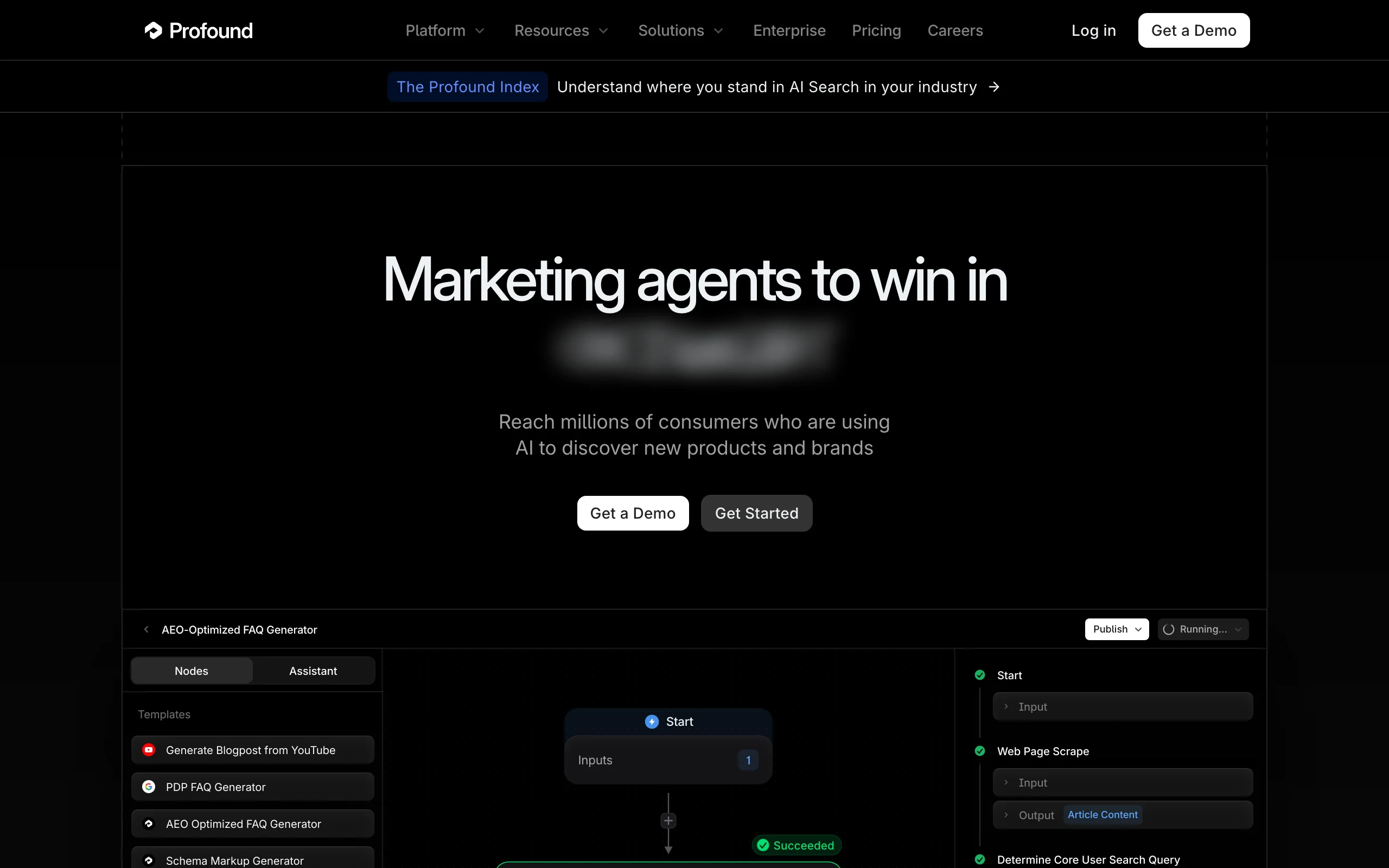 AI Mode SEO Checker: Profound
Profound is an AI search visibility platform that tracks how brands appear inside Google AI Mode, ChatGPT, Perplexity, Gemini, and Google AI Overviews. It treats AI Mode as a first-class surface, running synthetic prompts on a daily cadence and measuring whether your domain is cited, paraphrased, or absent from the generated answer.
The platform is built for teams that take a programme view of AI visibility, not just spot checks. Typical users include large B2B SaaS, marketplaces, and enterprise brands that have a content and SEO team and want to consolidate AI Mode tracking with the rest of the AI-search stack in one dashboard.
Key features
- Prompt-level tracking across Google AI Mode and 4 other AI engines
- Share-of-voice scoring with competitor benchmarks
- Citation source attribution per answer
- API and Slack alerts for new and lost citations
- Topic and intent clustering of prompts
Best for
- Enterprise B2B SaaS tracking 500 plus buyer prompts across AI Mode and other engines
- Marketing teams that already run a content programme and need a single AI visibility dashboard
- Agencies managing AI Mode visibility for multiple large clients
Pricing
- No public free tier
- Custom enterprise pricing, sales-led
Pros
- Tracks Google AI Mode alongside ChatGPT, Perplexity, Gemini, and AI Overviews in one view, removing the need for 3 separate trackers
- Deep prompt-level data lets you tie citations back to specific pages and content moves
- Strong API and integrations for plugging AI Mode data into your existing analytics stack
Cons
- Pricing and onboarding are geared to enterprise budgets, so it is overkill for small teams
- Setup is heavier than lightweight tools because the platform expects a thoughtful prompt inventory
2. Otterly AI, best lightweight AI Mode checker for SMBs
 AI Mode SEO Checker: Otterly AI
Otterly AI is a focused AI search monitor that tracks how your brand shows up in Google AI Mode, AI Overviews, ChatGPT, and Perplexity answers. It is designed to be simple: define your prompts, point it at your domain and competitors, and get a daily report of who got cited.
The tool is popular with solo marketers, founders, and small in-house teams that want to start watching AI Mode visibility without buying an enterprise contract. The interface is opinionated and lean, which keeps the learning curve short.
Key features
- Daily AI Mode and AI search citation feed
- Brand and competitor visibility tracking
- Prompt library with templates by industry
- Email and Slack notifications for citation changes
- Simple reporting suitable for client updates
Best for
- SMBs and founders tracking 20 to 100 prompts across AI Mode and AI Overviews
- Solo SEO consultants who need a client-facing AI visibility report
- Teams running a first AI Mode pilot before committing to enterprise tooling
Pricing
- Free trial
- Paid plans start from around $29 per month
Pros
- Fastest path from sign-up to a working AI Mode report
- Pricing is friendly to small teams and consultants
- Clear, opinionated interface that does not overwhelm non-technical users
Cons
- Less depth than enterprise platforms for prompt clustering and entity analysis
- Coverage of niche AI engines is more limited than Profound
3. Peec AI, best AI Mode analytics for in-house marketing teams
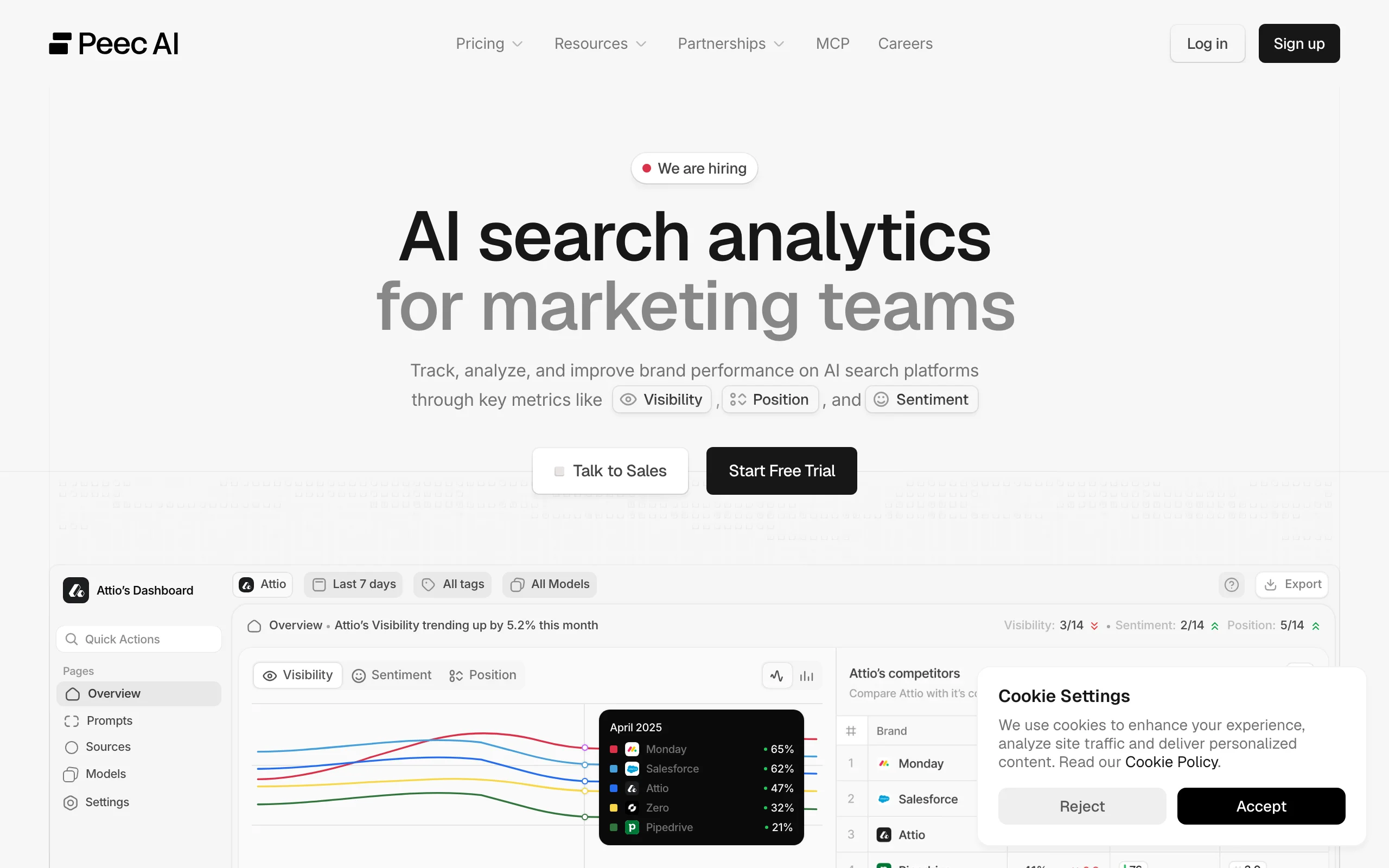 AI Mode SEO Checker: Peec AI
Peec AI is a prompt-first AI search analytics tool that maps how your content is cited in Google AI Mode, ChatGPT, Perplexity, and Gemini. Instead of bolting AI tracking onto a classic keyword tool, Peec is built around the prompts your buyers actually type, which fits how AI Mode questions are structured.
The product is a good match for in-house marketing teams that already work with buyer personas and use messaging frameworks. You can group prompts by funnel stage, persona, or product line, and watch share-of-voice shift as you publish new content.
Key features
- Prompt-centric workspace, not keyword-centric
- Persona and funnel-stage grouping
- Share-of-voice tracking inside Google AI Mode and other engines
- Source-level attribution per generated answer
- Exportable reports for stakeholders
Best for
- In-house B2B marketing teams that already think in terms of buyer prompts
- Demand-gen leads that want to tie AI Mode citations to pipeline impact
- Content teams looking for a clear before-and-after view when shipping AI search optimization
Pricing
- Free trial available
- Paid plans typically start from around $89 per month
Pros
- Prompt-first model fits how AI Mode answers are generated and consumed
- Clear funnel and persona grouping makes results easy to present internally
- Mid-market pricing, between SMB and enterprise
Cons
- API and integration depth is lighter than Profound for large analytics stacks
- Coverage of long-tail AI engines is narrower than the largest enterprise platforms
4. AthenaHQ, best AI Mode entity and knowledge-graph tracker
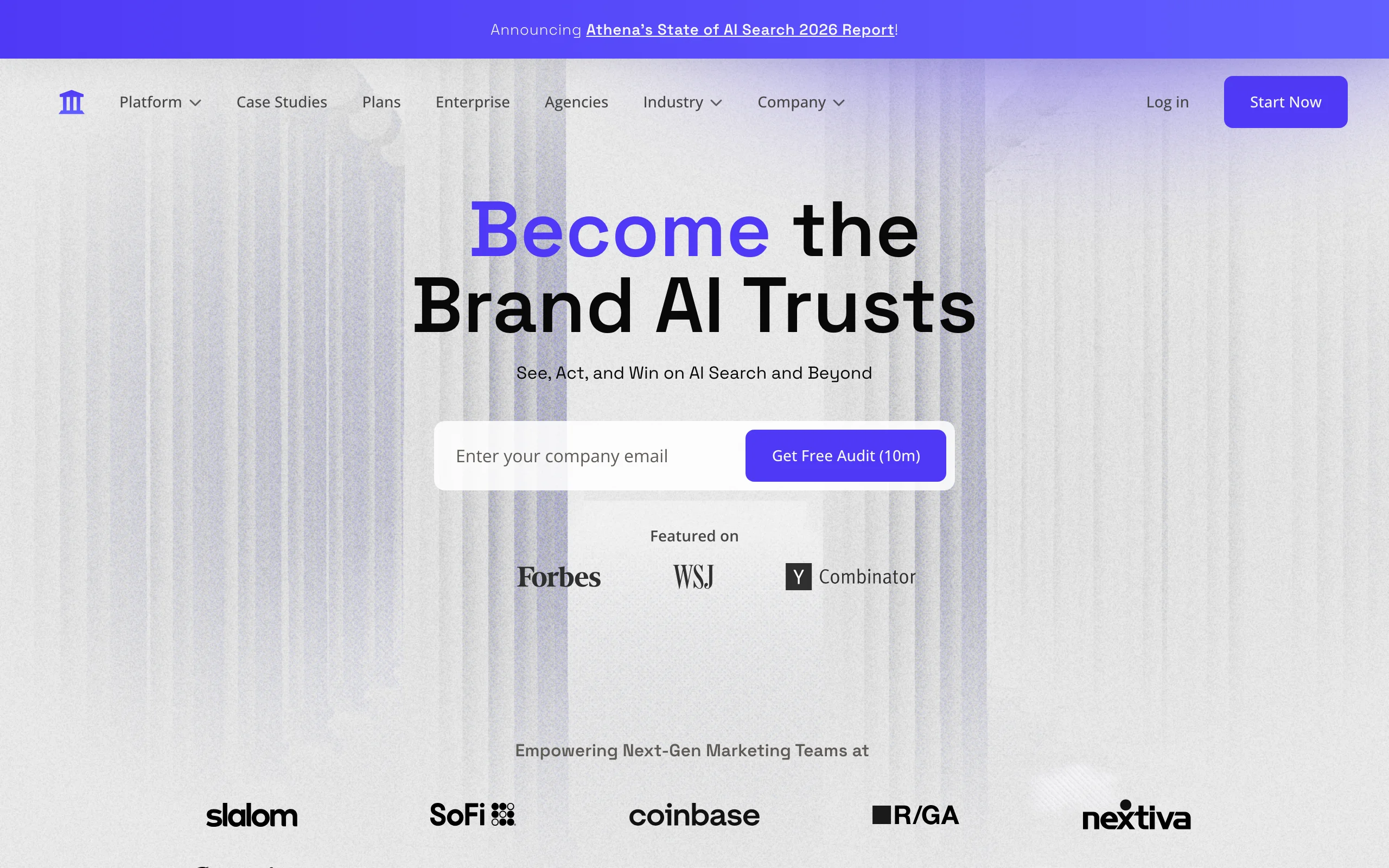 AI Mode SEO Checker: AthenaHQ
AthenaHQ is an AI search and entity analytics platform that focuses on how brands, products, and concepts appear inside AI Mode answers and other LLM responses. Where most checkers ask "did my URL get cited", AthenaHQ also asks "is my entity recognized at all" and "which competitors share that entity space".
This is valuable for AI Mode specifically, because Google AI Mode answers lean heavily on entity associations from the broader web rather than single page citations. If your brand entity is weak, even great content struggles to break through.
Key features
- Entity-level recognition tracking across AI Mode and other engines
- Competitor share-of-voice for the same entity
- Knowledge-graph view of co-occurring brands and concepts
- Prompt-level citation tracking
- API access for advanced use cases
Best for
- Brand and SEO teams running an entity-first AI visibility programme
- Companies in crowded categories where competitor co-occurrence matters
- Larger in-house teams or agencies with technical SEO depth
Pricing
- Custom, scale-up and enterprise plans
- Free demo or trial typically available on request
Pros
- Entity-aware methodology fits Google AI Mode and AI Overviews well, because both lean on knowledge-graph signals
- Strong competitor benchmarking by entity, not just by URL
- Useful for building a long-term GEO programme around entity work
Cons
- More complex to onboard than simple citation feeds
- Pricing is geared to mid-market and enterprise budgets
5. Daydream, best AI Mode workbench for agencies
 AI Mode SEO Checker: Daydream
Daydream is an AI search analytics workbench built for teams running AI Mode and AI Overview monitoring across many brands or product lines at once. Its strength is operational: prompt sets, cadences, reports, and alerts can be configured per client or per brand without forcing the same template on everyone.
Agencies and large in-house teams with multiple business units tend to find Daydream useful because it removes the spreadsheet glue work that piles up when you start tracking 10 to 50 client AI Mode profiles in parallel.
Key features
- Multi-brand and multi-client workspaces
- Configurable prompt sets and reporting cadences
- AI Mode, AI Overviews, and other engine coverage
- Citation, share-of-voice, and competitor reporting
- Role-based access for agency and client logins
Best for
- Agencies running AI Mode and AI Overview tracking for 5 plus clients
- Enterprise in-house teams managing AI visibility for many product lines or sub-brands
- Operations leads who want to standardize AI Mode reporting without writing scripts
Pricing
- Custom, agency-oriented tiers
- Pricing scales with brands tracked and prompts monitored
Pros
- Strong multi-tenant model that suits agencies and large enterprises
- Flexible reporting cadences, including weekly and monthly client decks
- Reduces operational overhead when you scale beyond 1 to 2 brands
Cons
- Overkill for single-brand SMB teams
- Setup quality depends heavily on how well your prompt inventory is designed up front
6. BrightEdge AI Catalyst, best for enterprise SEO teams already in BrightEdge
 AI Mode SEO Checker: BrightEdge AI Catalyst
BrightEdge AI Catalyst is the AI search visibility module inside BrightEdge, a long-standing enterprise SEO platform. It layers Google AI Mode and AI Overview tracking on top of classic keyword, ranking, and content data, which is convenient if your team already lives inside BrightEdge.
The fit here is mostly about consolidation. Enterprise SEO teams that have multi-year BrightEdge contracts and a mature SEO stack can extend their existing reporting to cover AI Mode without buying a separate vendor, training a new team, or moving data around.
Key features
- AI Mode and AI Overviews monitoring within the BrightEdge suite
- Cross-link of AI visibility data with traditional keyword and content data
- Enterprise-grade reporting and governance
- Integrations with existing BrightEdge content, technical, and analytics modules
- API access for enterprise data stacks
Best for
- Enterprise SEO teams already running BrightEdge as their primary platform
- Brands that want AI Mode visibility unified with traditional SEO data
- Highly regulated industries that need vendor consolidation for procurement reasons
Pricing
- Custom, enterprise contracts
- No public self-serve tier
Pros
- Consolidates AI Mode tracking into an existing enterprise SEO platform
- Mature reporting and governance suit large companies and regulated industries
- Cross-references AI Mode data with classic SEO performance metrics
Cons
- Locked-in fit, less useful if you are not already a BrightEdge customer
- AI Mode features can feel like an add-on layer rather than a purpose-built tool
7. Goodie, best simple AI Mode and AI Overviews tracker for early-stage teams
 AI Mode SEO Checker: Goodie
Goodie is a lightweight AI search visibility tool designed for early-stage and growth-stage teams. It tracks AI Mode and AI Overviews citations for a defined set of prompts, plus broader AI search where relevant, and presents the results in a simple dashboard.
The product is positioned to compete with Otterly on the SMB end, but leans slightly more towards content and growth teams that want a clean monthly view rather than a raw citation feed. It is a good starter tool when AI Mode visibility is one of several priorities, not the main one.
Key features
- AI Mode and AI Overviews citation tracking
- Simple weekly and monthly dashboards
- Prompt grouping by topic or product
- Competitor visibility benchmarks
- Email reports for stakeholders
Best for
- Seed and Series A teams running an AI Mode pilot
- Content marketers who want a clear monthly AI visibility view
- Founders evaluating whether to invest more in GEO and AI search optimization
Pricing
- Free tier with limited prompts
- Paid plans from around $49 per month
Pros
- Low barrier to entry, with a free tier for prompt validation
- Simple reporting suits non-technical stakeholders and investors
- Good middle ground between Otterly and mid-market tools
Cons
- Limited depth for enterprise prompt inventories
- Fewer integrations than larger platforms
How to choose the best AI Mode SEO checker for your needs
1) Are you tracking AI Mode only, or AI Mode plus the rest of the AI search surface?
If your team is mostly worried about Google AI Mode and AI Overviews because Google still drives most of your traffic, a focused tool like Goodie or Otterly AI is enough to start. You will get a clean view of citations, share-of-voice, and competitor presence without paying for engines you do not care about.
If buyer journeys also flow through ChatGPT, Perplexity, and Gemini, you want a multi-engine platform. Profound, Peec AI, AthenaHQ, and Daydream are stronger picks here. Our best AI Overview rank trackers post compares the broader AI search tracker market in more detail.
2) Are you running spot checks or a structured programme?
Spot-check use cases, such as "do we appear when buyers ask about our category in AI Mode this quarter", are fine on cheaper tools. A 30-day pilot on Otterly AI or Goodie with 30 prompts will tell you most of what you need.
If you are running a structured GEO programme, with quarterly OKRs tied to AI Mode share-of-voice, you need deeper prompt-level data, entity tracking, and historical baselines. Profound, AthenaHQ, and Peec AI are designed for that case. Most teams also pair the tool with a free AI visibility checker for fast page-level audits between full reports.
3) Do you need entity tracking, not just URL citations?
Google AI Mode leans heavily on entity recognition. A page can be the best answer on the web and still get skipped if Google does not associate your brand entity with the topic. Tools like AthenaHQ make entity recognition visible. If your category is crowded, treat entity tracking as a must-have, not a nice-to-have.
4) What is the total cost of ownership, including the work behind the tool?
Tools measure. They do not move the needle on their own. The actual work that lifts AI Mode citations sits upstream: entity architecture, structured data, content depth, and authority signals across the web. When you budget, plan for the team time or agency support that turns dashboards into citations. A common pattern is to pair a mid-market checker with a focused GEO programme, rather than buying the most expensive dashboard and hoping content teams figure out the rest.
If you have picked your AI Mode SEO checker but want a partner to run the work behind the data, with entity architecture, schema, content depth, and authority deployment across Google AI Mode, AI Overviews, ChatGPT, Perplexity, and Gemini, that is what AY Rank does through our GEO optimization programme. You can also explore the wider tool landscape in our roundup of the best AI SEO tools in 2026 before deciding what to plug into.
FAQ
What is Google AI Mode? Google AI Mode is a generative answer experience inside Google Search that returns a multi-turn, conversational response composed from web sources, rather than a list of blue links. It is a Google product feature, distinct from AI Overviews, and it changes how citations are awarded because users rarely click through to the underlying pages.
Is AI Mode the same as AI Overviews? No. AI Overviews are short generative summaries that appear at the top of a traditional Google search results page, while AI Mode is a separate conversational surface where the whole experience is generative. They share some ranking signals, but the prompt patterns, citation density, and tracking methodology differ, which is why AI Mode SEO checkers treat them as distinct.
Can free tools check AI Mode visibility? Some tools, such as Goodie and Otterly AI, offer free trials or limited free tiers that let you check AI Mode visibility for a small number of prompts. They are useful for validating whether AI Mode tracking is worth investing in, but they cap prompts and history, so most teams move to paid plans once the use case is proven.
How accurate is AI Mode tracking right now? AI Mode tracking is directional, not perfect. Tools run synthetic prompts on a schedule and capture the cited sources, but answers vary between regions, accounts, and sessions, so any single run can miss a citation. The right way to use AI Mode checkers is to look at trends over weeks and months across many prompts, not single snapshots.
Will Google open an official AI Mode API? Google has not committed to a public AI Mode API as of 2026, and most vendors rely on automated browsing and synthetic queries to capture results. If Google ships an API, tools that already model AI Mode prompts and citations as first-class data will adapt fastest, which is why investing in a prompt-first checker today still makes sense.
Do AI Mode results match Search Console data? Not directly. Search Console reports clicks and impressions on classic results, while AI Mode SEO checkers report citation appearances inside AI Mode answers, which do not always generate trackable clicks. You should treat AI Mode tracking as a parallel data set focused on visibility inside answers, not as a replacement for Search Console.
Should I prioritize AI Mode or AI Overview tracking first? For most B2B SaaS and service teams, AI Overviews still drive more visible traffic impact today, so start tracking those first if you have to pick one. AI Mode tracking is the strategic bet for the next 12 to 24 months as Google pushes more queries into the conversational surface, so plan to add it once your AI Overview baseline is in place.
This post is part of our AI SEO guide. Related reading: Best AI Overview Optimization Agencies, How to Appear in Google AI Overviews, ChatGPT vs Perplexity vs AI Overviews.

Adel tracks AI citation rates across ChatGPT, Perplexity, Gemini, and AI Overviews. He turns raw visibility data into actionable insights that guide our optimization strategy.
Full Bio →