Perplexity AI now processes 780 million search queries every month, up from 230 million in mid-2024 (Source: DemandSage, May 2025). Unlike ChatGPT or Google AI Overviews, Perplexity cites just 5.01 sources per response on average. That constraint is your opportunity: if you optimize for Perplexity correctly, each citation carries outsized weight and sends trackable referral traffic to your site.
This guide covers the specific tactics, technical requirements, and content patterns that earn Perplexity citations in 2026. You will learn how Perplexity's retrieval system differs from other AI engines, why Reddit plays a central role in its citation graph, and the step-by-step process we use with clients to increase their Perplexity visibility.
How Does Perplexity Differ from ChatGPT and Google AI Overviews?
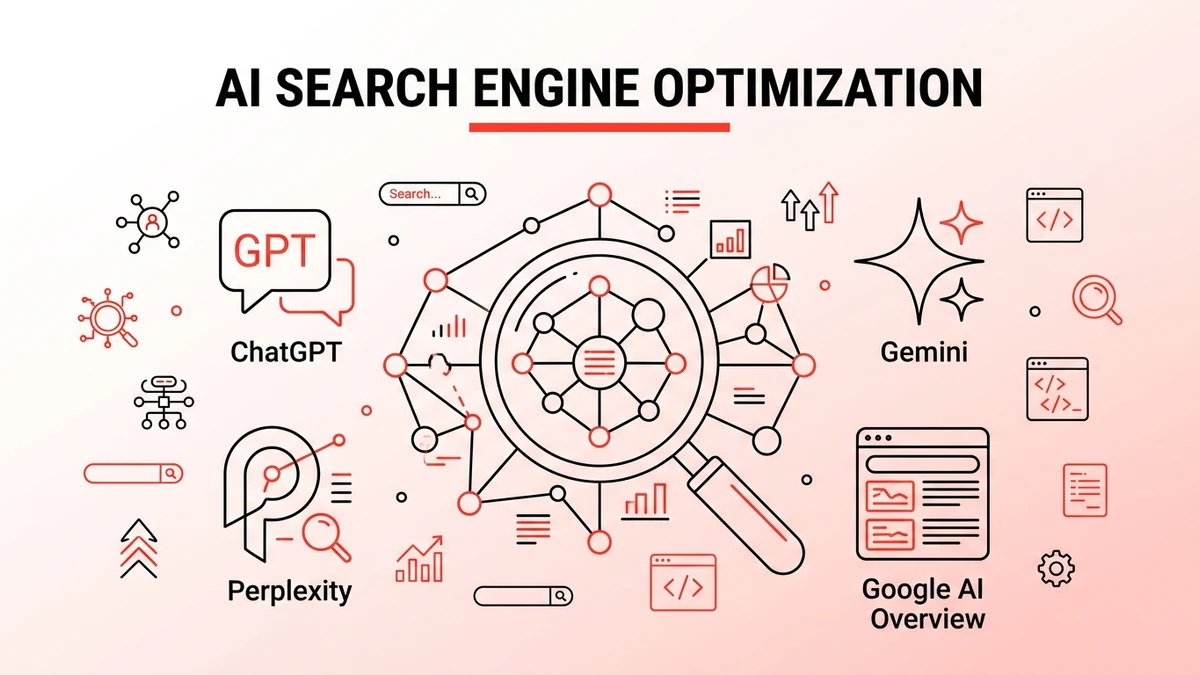
Before diving into optimization tactics, you need to understand what makes Perplexity fundamentally different from the other AI answer engines. The sourcing mechanisms are not the same, and strategies that work on ChatGPT can fail on Perplexity (and vice versa).
Perplexity searches the live web for every query. It does not rely on a static training dataset the way ChatGPT does for most responses. When a user asks Perplexity a question, it crawls and retrieves sources in real time, ranks them, synthesizes an answer, and attaches inline citations with clickable links. This is closer to a search engine with AI synthesis than a chatbot with web browsing bolted on.
ChatGPT uses its training data as the default knowledge base and only searches the web when the model decides external information is needed. Even then, it pulls from a broader set of sources (10.42 links per response on average) and does not always surface those sources visibly in the conversation.
Google AI Overviews sit inside Google Search results and draw primarily from pages already indexed and ranked by Google's traditional algorithm. They favor pages with existing SERP authority, which means the optimization playbook overlaps heavily with traditional SEO.
| Factor | Perplexity | ChatGPT | Google AI Overviews |
|---|---|---|---|
| Source retrieval | Real-time web crawl | Training data + optional browse | Google Search index |
| Citations per answer | 5.01 average | 10.42 average | 9.26 average |
| Citation visibility | Inline numbered links | Footnotes (sometimes hidden) | Embedded in SERP cards |
| Index freshness | Updated daily, surfaces content in 24h | Weekly web refresh | Standard Google crawl |
| Referral tracking | Yes, visible in GA4 | Limited | Blended with organic |
| Content format bias | Tables, BLUF, structured data | Long-form, conversational | SERP-optimized content |
| Recency weighting | Very high | Moderate | Low to moderate |
The practical implication: you cannot rely on a single AI optimization strategy across all platforms. If Perplexity is a priority channel for your audience, and it should be given its 1B+ monthly queries, you need a Perplexity-specific approach built around real-time indexing, structured content, and third-party validation signals.
Why Does Perplexity's Recency Bias Matter for Your Content?
Recency is Perplexity's strongest differentiator as a ranking signal. While Google rewards evergreen authority built over years and ChatGPT's training data creates a lag of weeks or months, Perplexity can surface freshly published content within 24 hours.
This creates two distinct advantages for content teams:
First, new content gets immediate distribution. Perplexity's index updates daily, and sites with consistent publishing cadences get crawled more frequently. If you publish a well-structured article today, it can appear in Perplexity answers tomorrow. Compare that to Google, where new pages typically take weeks to gain traction.
Second, content freshness is a direct ranking input. Perplexity's retrieval system uses ML-based predictions about which URLs need updating and when. Pages that have not been refreshed in 90+ days begin to decay in citation frequency. In our experience with client accounts, updating statistics and adding new examples every quarter prevents this decay and often triggers a citation boost.
The early performance window matters too. According to optimization data from NickLafferty.com, new content needs at least 1,000 impressions and a 4.2%+ click-through rate within the first 30 minutes to qualify for sustained top placements. This means your distribution strategy on publish day, including social sharing, email lists, and community posting, directly affects long-term Perplexity visibility.
Practical recency playbook:
- Publish new articles with timestamps visible in the HTML (Perplexity reads date metadata)
- Update cornerstone content every 60-90 days with fresh data points
- Add "Last updated: [date]" to the page, both in visible text and in schema markup
- Distribute new content across social and email within the first hour of publishing
- Monitor Perplexity referral traffic in GA4 within 48 hours of publishing
What Is the Reddit Co-Citation Strategy for Perplexity?
This is one of the most underused tactics in AI SEO: Reddit plays a central role in Perplexity's citation graph.
Reddit accounts for 46.7% of Perplexity's top 10 citations, more than three times the share of the next most-cited source, YouTube, at 13.9% (Source: 5W AI Platform Citation Index, 2026). Reddit ranks sixth among all cited sources across industries, and in technology and marketing categories, it ranks even higher.
Why does Perplexity lean so heavily on Reddit? Three reasons:
- Real-time signals. Reddit threads update continuously, and Perplexity's daily indexing captures new comments and discussions faster than it captures changes to most websites.
- Community validation. Upvotes and comment threads create what Perplexity's retrieval system treats as "consensus signals." A product recommended across multiple Reddit threads carries more weight than a single blog post making the same claim.
- Entity-rich content. Reddit discussions naturally include specific product names, pricing details, comparisons, and concrete numbers, exactly the type of information Perplexity extracts for citations.
Reddit comments can appear in Perplexity answers within 24 hours of posting. That speed advantage makes Reddit-based GEO one of the fastest paths to AI visibility.
How to build a Reddit co-citation strategy:
- Participate in high-authority subreddits relevant to your industry. Subreddit authority matters more than account karma for AI citations (Source: CMSWire, 2026). Active participation in subreddits like r/marketing, r/SaaS, r/technology, and r/SEO increases citation probability.
- Write long-form comments (300+ words) with structured arguments, specific data points, and source links. Long-form Reddit comments with specific product mentions get cited 3x more than vague recommendations.
- Reference your own content naturally. When answering a question on Reddit, include a link to your relevant blog post or resource as supporting evidence. Perplexity picks up these cross-references and often cites both the Reddit thread and the linked source.
- Create original data posts. Share proprietary research, survey results, or case study findings in relevant subreddits. Original data is exactly what Perplexity's retrieval system prioritizes.
Reddit is not a secondary channel for Perplexity optimization. It is the primary third-party citation source. A coordinated strategy that pairs high-quality site content with active Reddit participation creates a co-citation loop that Perplexity's retrieval system rewards within 60 days.
How Do You Structure Content for Perplexity Citations?
Perplexity's retrieval system does not reward long content. It rewards dense content: a high ratio of facts, data points, and actionable insights per paragraph. Pages with proper structure earn 2.8x higher citation rates than poorly formatted alternatives (Source: Discovered Labs, 2026).
The core principle is what optimization experts call BLUF formatting: Bottom Line Up Front. Place the direct answer in the first 40-60 words of each section. Context and supporting evidence follow. Pages from domains that structure content this way get cited 65% more frequently than pages with buried answers.
Here is the structural framework we use with clients:
1. Atomic paragraphs. Write each paragraph as a self-contained unit that makes sense when extracted from the article. Perplexity's RAG system pulls individual paragraphs, not full sections, so every paragraph needs to stand on its own.
2. Tables over prose. Perplexity prioritizes pages with structured tabular data. Pages featuring clear HTML tables for feature comparisons get cited 42% more often than pages describing the same information in paragraph form (Source: NickLafferty, 2026). Use Markdown tables for every comparison, feature matrix, and data summary.
3. FAQ blocks with direct answers. 78% of AI-generated answers include list formats. Structure your FAQ sections so the first sentence of each answer is a complete, factual response. Perplexity extracts these directly.
4. Schema markup. FAQ schema pages are 3.2x more likely to appear in AI responses. Schema contributes up to 10% of Perplexity's ranking factors. Implement FAQ, HowTo, and Article schema on every key page.
5. Clear heading hierarchy. Use H2 for major topics and H3 for sub-sections. Perplexity's semantic chunking uses headings to segment content. A clear hierarchy helps the retrieval system identify which section answers which query.
6. Bold key claims. Bold your most important facts, statistics, and conclusions. These visual signals help Perplexity's extraction system identify the highest-value content within a section.
What Are the Technical Requirements for Perplexity Optimization?
Three technical factors commonly block Perplexity citations, and all three are fixable in a single sprint with a technical SEO audit:
1. PerplexityBot access. Check your robots.txt file. If it includes a disallow rule for PerplexityBot (user-agent: PerplexityBot), your content cannot be cited. Period. Some CMS platforms and security plugins block AI crawlers by default. Verify your robots.txt allows PerplexityBot access to all pages you want cited.
2. JavaScript rendering. PerplexityBot cannot fully parse JavaScript-rendered content. If your site uses client-side rendering (React SPA, Angular) without server-side rendering or static generation, your content may be invisible to Perplexity. Use SSR or SSG for all content pages.
3. Server response time. A slow TTFB (Time to First Byte) causes PerplexityBot's crawler to time out. Keep TTFB under 500ms for all content pages. Perplexity's crawler has less patience than Googlebot.
Beyond these blockers, there are optimization signals that increase citation probability:
- Structured data markup. Implement Article, FAQ, and BreadcrumbList schema. Schema contributes up to 10% of ranking factors on Perplexity.
- E-E-A-T signals. Add expert bylines with credentials, LinkedIn profile links, and visible publication/update timestamps. Perplexity's quality scoring evaluates author authority.
- HTTPS and security. Security and compliance contribute approximately 5% to Perplexity ranking scores.
- Mobile performance. Perplexity's mobile app is a major traffic driver. Ensure your content renders cleanly on mobile devices.
What Is the Step-by-Step Process to Optimize for Perplexity?
Here is the exact process we use at AY Rank to increase Perplexity citations for client accounts. We have refined this over dozens of engagements, and it works across B2B SaaS, e-commerce, professional services, and local businesses.
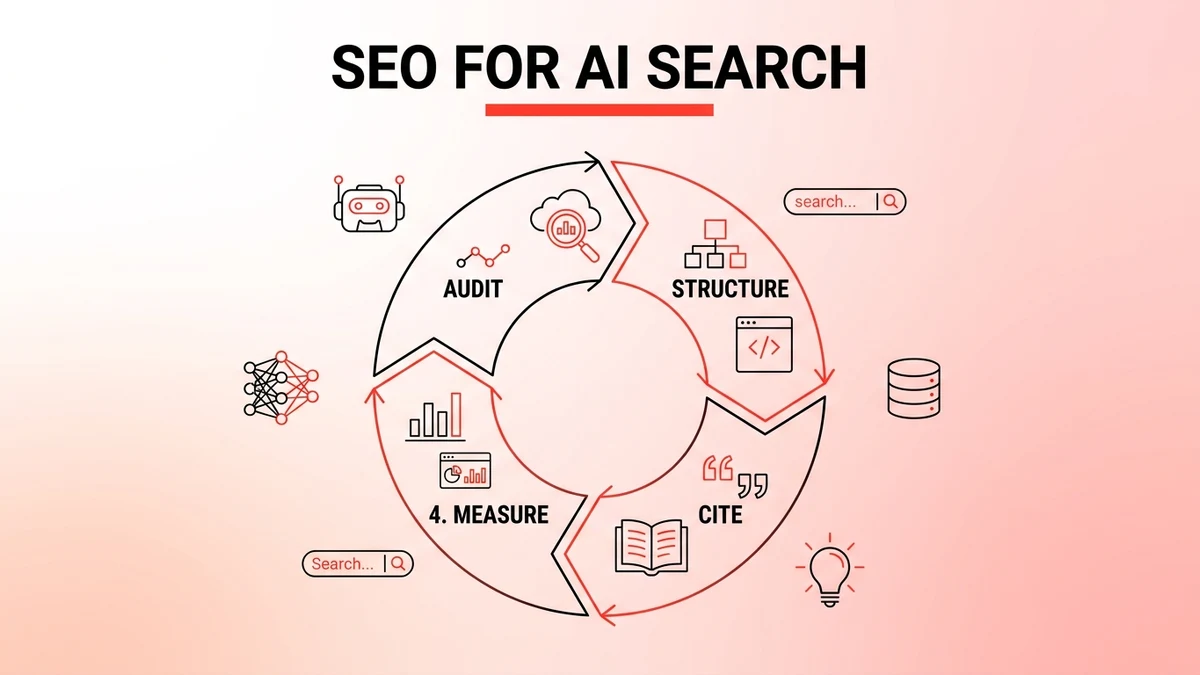
Step 1: Audit your current Perplexity visibility.
Search for your brand name, product names, and core service keywords directly in Perplexity. Note which queries cite your content and which cite competitors. Check GA4 for existing perplexity.ai referral traffic. This baseline tells you where you stand.
Step 2: Fix technical blockers.
Verify PerplexityBot access in robots.txt. Test that your key pages render without JavaScript. Measure TTFB and fix any pages above 500ms. These fixes alone can unlock citations within days.
Step 3: Restructure your top 10 pages for BLUF format.
Take your highest-traffic and highest-converting pages. Rewrite the first 40-60 words of each major section to lead with the direct answer. Add tables where you currently use comparison prose. Implement FAQ schema. This restructuring typically yields a 2.8x increase in citation rates.
Step 4: Build your entity graph.
Create a consistent entity across your site, Google Business Profile, Wikipedia (if eligible), and industry directories. Define your brand, founders, and core services with specific details (founding year, customer count, specializations). Perplexity's retrieval system builds entity profiles and cites sources that have clear entity definitions.
Step 5: Launch a Reddit co-citation campaign.
Identify 3-5 subreddits where your target audience participates. Begin posting valuable, data-rich comments and threads that naturally reference your content. Aim for 300+ word contributions with specific numbers. Within 60 days, you should see Reddit co-citations pulling your primary domain into Perplexity answers.
Step 6: Establish a content refresh cadence.
Set a 90-day update cycle for your top 20 pages. Update statistics, add new case studies, and revise outdated sections. Republish with updated timestamps. Perplexity's ML-based indexer rewards this behavior with sustained citation eligibility.
Step 7: Measure and iterate.
Track perplexity.ai referral traffic in GA4 weekly. Monitor which queries trigger your citations using manual Perplexity searches for your target keywords. Run quarterly content audits to identify pages losing citation share and prioritize refreshes.
How Does Domain Authority Affect Perplexity Rankings?
Domain authority contributes approximately 15% to Perplexity's ranking factors, but the dynamics differ from Google. Perplexity favors domains 10-15 years old, which get cited at 26.16%, compared to Google's preference for 15+ year domains at 49.21% (Source: Discovered Labs, 2026).
This means younger, more specialized domains have a genuine opportunity on Perplexity that they do not have on Google. If your domain is 5-10 years old but produces authoritative, well-structured content in a specific niche, Perplexity may cite you ahead of legacy publications.
Three ways to build domain authority for Perplexity specifically:
- Third-party validation. Get mentioned on Wikipedia, G2, Capterra, and industry directories. These "consensus signals" boost Perplexity citations within 60 days. A link building strategy focused on high-authority directories and resource pages compounds over time.
- Consistent publishing. Sites with regular publication cadences get crawled more frequently by PerplexityBot. Aim for at least 2 new pieces of content per week.
- Topic clustering. Build deep content clusters around your core expertise. Perplexity's retrieval system recognizes topical authority, so 20 well-structured articles on a single topic outweigh a single "guide" trying to cover everything.
| Domain Factor | Perplexity Weight | Google Weight | What It Means |
|---|---|---|---|
| Domain age (10-15 years) | 26.16% citation rate | Lower priority | Younger domains compete better on Perplexity |
| Domain age (15+ years) | Lower priority | 49.21% citation rate | Legacy advantage is weaker on Perplexity |
| Content recency | Very high | Moderate | Fresh content wins on Perplexity |
| Schema markup | ~10% of ranking | Indirect via rich results | Direct ranking input on Perplexity |
| Reddit mentions | ~46.7% of top citations | Minimal direct impact | Major citation source for Perplexity |
| Backlink profile | Moderate | Very high | Less dominant on Perplexity than Google |
How Do You Measure Perplexity Optimization Results?
Unlike ChatGPT, where referral tracking is limited, Perplexity sends trackable referral traffic visible in Google Analytics 4. This makes measurement straightforward compared to other AI platforms.
GA4 setup: Navigate to Acquisition > Traffic Acquisition and filter for "perplexity.ai" as a referral source. You will see sessions, users, engagement rate, and conversions from Perplexity-referred visitors. Set up a custom segment for Perplexity traffic to track it alongside organic and direct.
Key metrics to track:
- Referral sessions from perplexity.ai: Your primary volume metric. Track weekly.
- Conversion rate by source: AI-referred traffic converts at 14.2% on average, roughly 5x higher than traditional organic at 2.8% (Source: Semrush, 2026). If your Perplexity conversion rate is below this benchmark, your landing pages may need work.
- Pages per session: Perplexity visitors who click through tend to browse deeper. If pages-per-session is low, check that your internal linking supports discovery.
- Citation frequency: Manually search your target keywords in Perplexity weekly. Track how often your domain appears and in which position (first citation vs. last).
Tools for Perplexity monitoring:
We recommend running a GEO optimization audit quarterly to benchmark your Perplexity citation rate against competitors and identify new keyword opportunities where Perplexity is gaining query share from Google.
Frequently Asked Questions
What does it mean to optimize for Perplexity AI?
Optimizing for Perplexity means structuring your content so Perplexity's real-time retrieval system selects and cites your pages when answering user queries. This involves BLUF formatting, schema markup, PerplexityBot crawl access, and building third-party validation signals. The process differs from traditional SEO because Perplexity searches the live web for every query rather than relying on a static index.
How is Perplexity SEO different from regular SEO?
Perplexity SEO prioritizes content recency, information density, and structured data over backlink volume and keyword density. Perplexity updates its index daily and can surface new content within 24 hours, while Google typically takes weeks. Perplexity also cites just 5 sources per answer (vs. Google AI's 9.26), making each citation slot more competitive and more valuable.
Does Perplexity use Reddit as a source?
Yes, Reddit is Perplexity's top citation source. Reddit accounts for 46.7% of Perplexity's top 10 citations, more than 3x the share of YouTube, the next most-cited source (Source: 5W AI Citation Index, 2026). Reddit comments can appear in Perplexity answers within 24 hours of posting, making it one of the fastest paths to AI visibility.
How quickly can I see results from Perplexity optimization?
Technical fixes like unblocking PerplexityBot can produce citations within days. Content restructuring for BLUF format typically shows results within 2-4 weeks. A full Reddit co-citation strategy takes approximately 60 days to generate consistent co-citations. Overall, most clients see measurable Perplexity referral traffic increases within 30-60 days of starting optimization.
What is the BLUF format and why does Perplexity prefer it?
BLUF stands for Bottom Line Up Front. It means placing the direct answer to a question in the first 40-60 words of a section, with context and evidence following. Pages using BLUF formatting get cited 65% more frequently by Perplexity because the retrieval system can extract clean, self-contained answers without needing to parse surrounding context. Our AI SEO service uses BLUF as the foundation of every content optimization.
Can I track Perplexity traffic in Google Analytics?
Yes. Perplexity sends trackable referral traffic that appears in GA4 under Acquisition > Traffic Acquisition as "perplexity.ai." AI-referred visitors convert at 14.2% compared to 2.8% for traditional organic traffic (Source: Semrush, 2026). Set up a custom GA4 segment for Perplexity traffic to monitor volume, engagement, and conversions separately.
What schema markup helps with Perplexity rankings?
FAQ, Article, HowTo, and BreadcrumbList schema all improve Perplexity citation rates. FAQ schema pages are 3.2x more likely to appear in AI responses. Schema markup contributes approximately 10% to Perplexity's overall ranking factors. Implement structured data on every page you want cited, and validate it using Google's Rich Results Test.
How often should I update content for Perplexity?
Update your highest-value pages every 60-90 days. Perplexity's ML-based indexer tracks content freshness and pages that go stale lose citation eligibility over time. Each update should include refreshed statistics, new examples or case studies, and revised timestamps in both visible text and schema markup.
Sources: DemandSage Perplexity Statistics 2026, Discovered Labs Citation Guide, NickLafferty Perplexity Ranking Tactics, 5W AI Platform Citation Index 2026, CMSWire Reddit AI Citations, Semrush AI Traffic Data
This post is part of our AI SEO guide. Related reading: Best AI SEO Tools, ChatGPT Visibility Audit Guide, Why Isn't My Business Cited by AI? Mentions vs. Citations.

Walid founded AY Rank to help businesses dominate AI search. He leads the GEO methodology and oversees client strategy across 50+ cities in Europe, Middle East, and North Africa.
Full Bio →