Grok cited a brand in 27.01% of tested queries, against 13.05% for Perplexity and 9.09% for Google AI Mode, according to independent research from Superlines published in March 2026. That is more than double the next-highest platform, and it is not a small-sample fluke: the same research documented citation rates varying by as much as 615x between platforms for the identical brand, meaning a company dominant in Grok's answers can be nearly invisible in Claude's.
Ahrefs added Grok to its Brand Radar AI-visibility tracking in April 2026, alongside a broader capacity increase across its API tiers, a clear signal that the SEO tooling industry now treats Grok as a citation surface worth measuring on its own, not an afterthought behind ChatGPT and Perplexity. Despite that, most GEO advice still treats "optimize for AI search" as a single playbook. Grok's ai citation rate being this far out of line with the rest of the field says that playbook needs a platform-specific chapter.
What is Grok's AI citation rate, and how does it compare to other platforms?
Grok's citation rate leads the field by a wide margin in the most recent independent cross-platform data available.
| Platform | Citation rate (Superlines, March 2026) |
|---|---|
| Grok | 27.01% |
| Perplexity | 13.05% |
| Google AI Mode | 9.09% |
A citation rate this much higher is not evidence that Grok is simply "better" at recommending brands. It reflects a structurally different retrieval mechanism, one built on live social data rather than a crawled and indexed web corpus, which surfaces sources the other platforms are not built to find at all.
Why does Grok cite brands more often than other AI platforms?
Grok is built into X (formerly Twitter), which has roughly 600 million monthly active users generating real-time posts, replies, and threads. Where ChatGPT, Perplexity, and Google AI Mode primarily retrieve from crawled and indexed web content, Grok leans heavily on live social signals, recent posts, trending conversations, and engagement patterns happening on the platform in real time.
That difference in data source explains the citation-rate gap directly. A crawled-web retrieval system can only cite what has been indexed, which for most brands means a handful of authoritative pages published weeks or months ago. A real-time social retrieval system can cite a post from an hour ago, which means far more surface area exists for a brand to be mentioned, at the cost of far less control over the context in which it happens.
That trade-off cuts both ways. A brand that shows up frequently in Grok's answers has less ability to shape the framing than one carefully building citations through published, structured content, since a live post's tone and accuracy are set the moment it goes out, not curated afterward. Higher citation frequency is not automatically a better outcome if a meaningful share of those citations come from an unmanaged, off-message conversation rather than a deliberate content strategy.
How does optimizing for Grok differ from optimizing for ChatGPT or Perplexity?
The mechanism difference changes what actually earns a citation, not just how often one happens.
- Active, current presence on X, since Grok's retrieval leans on recent posts and threads rather than an indexed archive
- Real engagement (replies, quote posts, sustained conversation) over a single high-production post
- Being part of live conversations on trending topics in your category as they happen
- Long-form web content that would otherwise drive citations in ChatGPT or Perplexity's crawled index
- Traditional backlink authority, since Grok is not primarily ranking indexed pages
- Evergreen structured data alone, without any live-platform presence to surface it
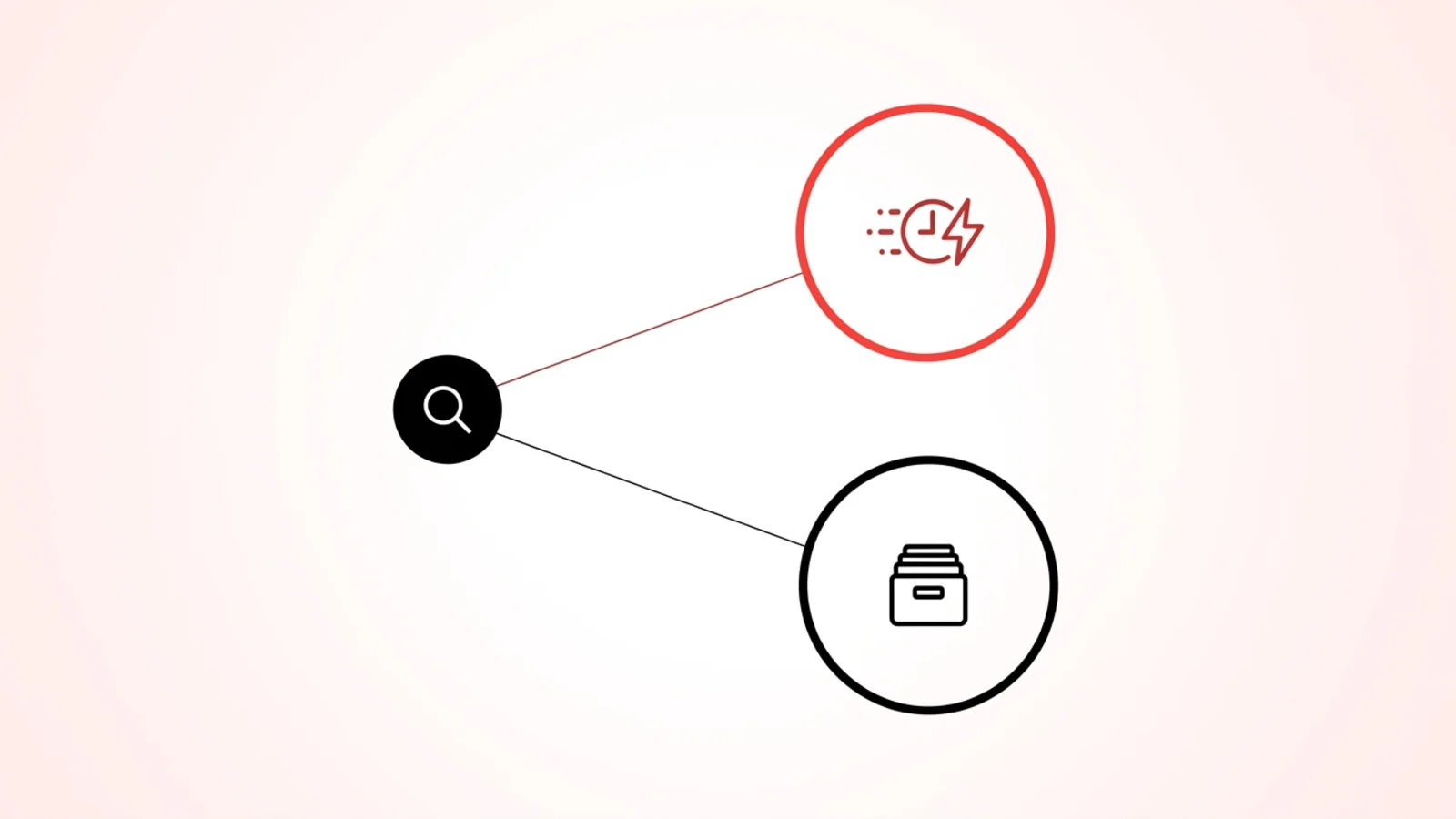 One data source icon branching to a real-time stream icon labeled with a clock, versus a separate branch to a static archive icon, representing two different retrieval mechanisms feeding AI citations
Grok's high citation rate comes from retrieving live social data rather than a crawled web index. A brand's X presence, not its web content alone, is the input that most directly shapes whether Grok cites it.
Should every brand prioritize Grok optimization right now?
Not uniformly. Grok's audience skews toward X's existing user base, tech, finance, media, and politically engaged consumers, so its citation reach matters more for brands already active in those categories than for one with no X presence and no plan to build one. What every brand should do, regardless of category, is stop assuming a single cross-platform citation number tells the whole story. Our AI citation tracking tools comparison covers which monitoring platforms actually report Grok separately rather than folding it into a blended average that hides exactly the kind of 615x swing this data shows, and our AI search monitoring tools guide breaks down platform coverage in more depth for teams evaluating a first tracking setup.
How should businesses start optimizing for Grok specifically?
Start by establishing or reactivating a genuinely active X presence, since Grok's retrieval draws on real engagement, not a dormant account with old posts. From there, participate in live conversations relevant to your category rather than only publishing scheduled promotional content, since Grok's citation behavior favors current, engaged threads over static announcements.
Pair that platform-specific work with the entity clarity and structured data fundamentals that support every AI platform's ability to identify who you are, since Grok still needs to resolve a mention to a real, verifiable entity even when the source content itself is a live post rather than a crawled page. Our AI SEO services and GEO optimization services cover this multi-platform entity work directly, rather than optimizing for one engine at the expense of the others.
Frequently asked questions
What is Grok's AI citation rate?
Grok's AI citation rate is 27.01%, according to independent research from Superlines published in March 2026, the highest of any AI platform tested in that analysis, compared to 13.05% for Perplexity and 9.09% for Google AI Mode.
Why does Grok cite brands more often than ChatGPT or Perplexity?
Grok retrieves heavily from live, real-time social data on X rather than a crawled and indexed web corpus, which surfaces far more recent, conversational sources than a traditional retrieval-augmented generation system built on indexed pages, resulting in a structurally higher citation rate.
Does Grok cite sources the same way ChatGPT does?
Not exactly; Grok can cite live posts, threads, and real-time conversations on X in addition to web content, while ChatGPT's citations draw primarily from its indexed and live-search web retrieval, meaning the pool of citable material differs meaningfully between the two.
Is Grok tracked by AI visibility monitoring tools?
Yes. Ahrefs added Grok to its Brand Radar AI-visibility tracking platform in April 2026, and several dedicated AI citation tracking tools report Grok separately from other platforms, though coverage varies by tool and pricing tier.
How much does brand citation rate actually vary between AI platforms?
Substantially; Superlines' March 2026 analysis found citation frequency for the same brand varying by as much as 615x between platforms, meaning a brand's visibility on one AI engine says very little about its visibility on another.
Should I stop investing in web content if Grok favors social presence?
No; web content and structured data remain essential for ChatGPT, Perplexity, and Google AI Mode, which do rely on crawled and indexed sources, so Grok-specific social presence is an addition to that foundation, not a replacement for it.
Does X (Twitter) activity help with citations on other AI platforms too?
It can, since some AI platforms' web crawlers and live-search features do index public X posts and threads, but the effect is far smaller than on Grok itself, where X is the primary retrieval source rather than one input among many.
Sources: AI Search Statistics 2026: 60+ Data Points on Visibility, Citations, and Traffic (Superlines), Ahrefs adds Grok to Brand Radar and quadruples API limits in April update (PPC Land)
This post is part of our GEO Optimization guide. Related reading: Google's AI Optimization Guide, Microsoft's AEO and GEO Guide, AI Shopping Agents.

Adel tracks AI citation rates across ChatGPT, Perplexity, Gemini, and AI Overviews. He turns raw visibility data into actionable insights that guide our optimization strategy.
Full Bio →