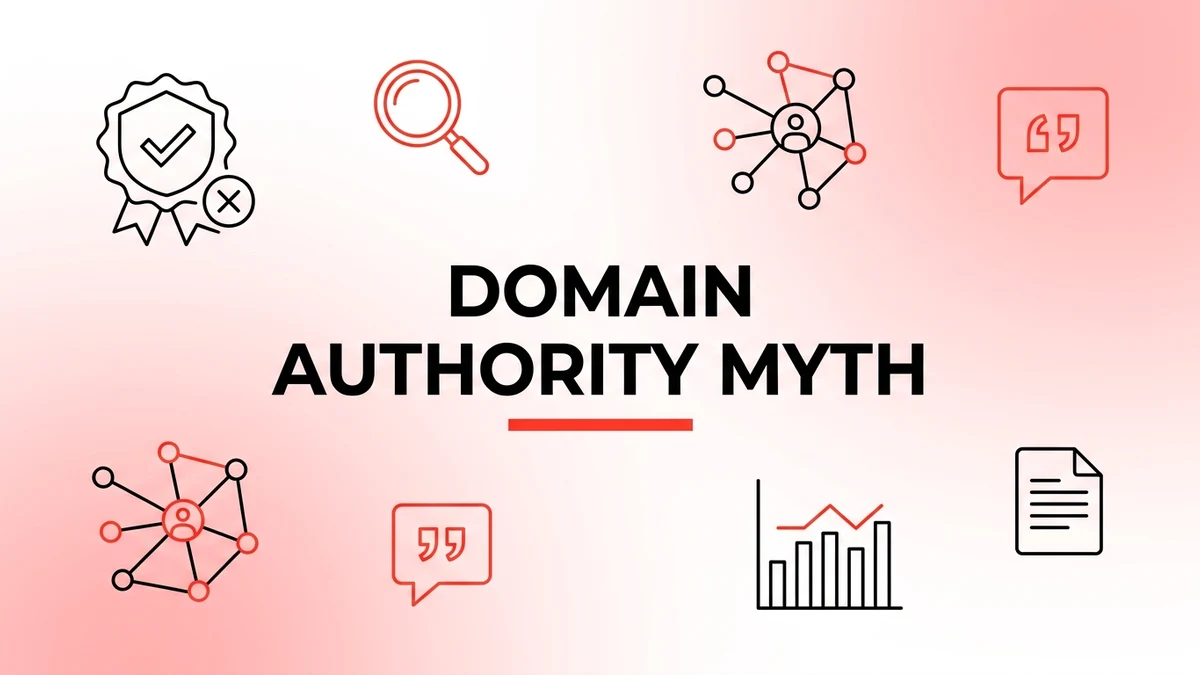
Surfer analyzed 5 million unique citation source URLs across 20,000 prompts, pulled from three months of AI Tracker data spanning AI Mode, AI Overviews, ChatGPT, and Perplexity, and tested how citation frequency correlates with three separate domain authority metrics: PageRank and Harmonic Centrality from Common Crawl, and Domain Score from Surfer via DataForSEO. The result across all three: domain authority correlates with AI citation frequency close enough to zero to be noise.
That is not an isolated finding. Featured's AI Citation Report, drawn from 405 GEO audits run between June and August 2026, found that more than a third, 34.5%, of 22,881 analyzed AI citations came from sites with a Domain Authority under 40. A separate analysis from Clairon put a sharper number on the same pattern: domain authority predicts less than 4% of AI citations. Domain authority ai citations correlation, across three independent studies using different methodologies, keeps landing in the same place: weak to negligible.
What did the 5-million-citation domain authority study actually find?
Surfer's methodology tested domain authority against citation frequency using three distinct metrics rather than relying on a single proprietary score, a meaningful design choice since it rules out one metric's quirks explaining the result. PageRank and Harmonic Centrality came from Common Crawl's open web graph, and Domain Score came from Surfer's own metric via DataForSEO. All three showed the same pattern: a correlation with citation frequency close enough to zero to be statistical noise, not a real relationship.
If domain authority doesn't predict AI citations, what does?
Per Surfer's analysis, pages that already rank for multiple fan-out queries, the sub-queries an AI system generates internally while researching an answer, are far more likely to earn a citation than pages with high domain authority alone. That reframes the predictive signal from "how authoritative is this domain overall" to "how many different angles of this specific topic does this page already rank for."
How should this change what SEO and GEO teams prioritize?
The practical shift is from an authority-first mindset to a coverage-first one for any page competing for AI citation specifically.
| Priority | Domain-authority-first approach | Coverage-first approach this data supports |
|---|---|---|
| What to build | Backlinks and overall site authority | Depth on the specific topic's fan-out queries |
| Where to focus | Highest-authority domains and pages | Pages that already rank for many angles of one topic |
| Small-site strategy | Wait until authority is built up | Compete on topical depth now, regardless of domain age |
| Content investment | Broad content calendar for authority signals | Deep, multi-angle coverage of fewer, well-chosen topics |
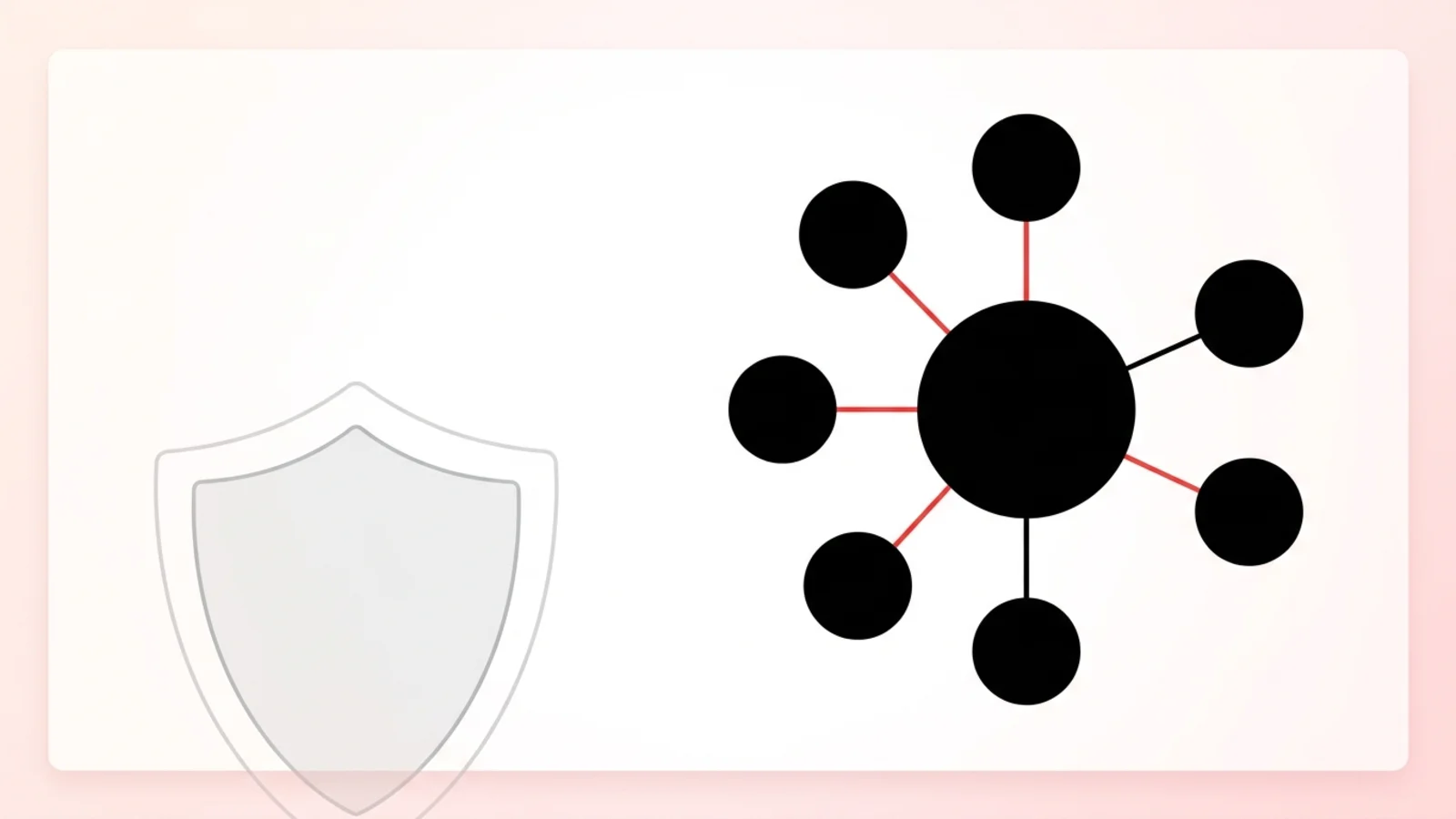 A large authority-badge icon shown crossed out and fading, next to a smaller node-cluster icon covering many connected angles shown strong and central
Three independent studies, using different methodologies and different domain authority metrics, all found the same thing: overall site authority barely predicts whether a specific page gets cited by an AI engine. Topical coverage breadth on the exact query a model is researching is the stronger signal.
Should smaller or newer sites compete for AI citations now?
Yes, and this data is a direct argument for it. A site with low domain authority and no realistic path to outranking established competitors in classic Google SEO can still compete for AI citations by building genuinely deep, multi-angle coverage of a specific topic, since that is the signal these studies found actually correlates with getting cited.
- Deep, focused topical coverage does not require years of backlink building to produce
- A narrow, well-covered niche can rank for more fan-out queries on that topic than a broad, high-authority competitor
- 34.5% of real citations already go to sub-40 DA sites, so the ceiling is not structural
- Classic Google organic rankings, where authority signals remain load-bearing
- Getting crawled and indexed quickly enough to be in contention for citation at all
- General brand trust signals that support entity recognition alongside content depth
How do you build the kind of topical coverage that predicts AI citations?
Start by mapping the fan-out queries a model would likely generate for your target topic, the specific sub-questions and angles a real buyer or researcher would ask, rather than optimizing a single page around one broad keyword. Our topical authority for AI search guide covers how to build that kind of multi-angle coverage systematically rather than guessing at related questions.
Our content SEO services and GEO optimization services are built around exactly this shift: prioritizing coverage depth on the queries that actually drive citation, rather than treating domain authority as a prerequisite a smaller site has to clear first. This is the same logic behind our structured data for AI citation guide: clean, extractable structure on a well-covered topic does more for citation odds than authority signals built for a different scoring system entirely.
Frequently asked questions
Does domain authority matter for AI citations?
Barely; an analysis of 5 million AI citations across ChatGPT, Perplexity, AI Overviews, and AI Mode found domain authority correlates with citation frequency close enough to zero to be statistical noise, across three separate domain authority metrics.
What percentage of AI citations come from low domain authority sites?
34.5% of 22,881 analyzed AI citations came from sites with a Domain Authority under 40, according to Featured's AI Citation Report covering June through August 2026, indicating domain authority is not a hard gate on citation eligibility.
What actually predicts whether a page gets cited by an AI engine?
Per Surfer's 5-million-citation analysis, pages that already rank for multiple fan-out queries, the internal sub-queries an AI system generates while researching an answer, are far more likely to earn a citation than pages with high domain authority alone.
Can a new or low-authority website get cited by ChatGPT or Perplexity?
Yes; the data indicates domain authority is not a strict prerequisite for AI citation, so a newer or lower-authority site can compete by building genuinely deep, multi-angle topical coverage rather than waiting to accumulate backlink authority first.
Is domain authority still useful for anything in 2026?
Yes, for classic Google organic rankings and general crawl and indexing priority, where authority signals remain meaningful; it is specifically citation frequency in AI-generated answers where the correlation has been found to be weak to negligible.
How many domain authority metrics did the Surfer study test?
Three: PageRank and Harmonic Centrality sourced from Common Crawl's open web graph, and Domain Score, Surfer's own metric via DataForSEO, all of which showed a similarly weak correlation with AI citation frequency.
What is a fan-out query in AI search?
A fan-out query is one of the internal sub-queries an AI system generates while researching a broader question before producing its final answer; pages ranking for many of these related sub-queries on a topic are more likely to be cited than pages relying on domain-wide authority alone.
Sources: We Analyzed 5 Million AI Citations. Domain Authority Didn't Predict Any of Them. (Surfer), Featured Launches GEO Audit to Show Brands Which Publications AI Search Engines Cite (GlobeNewswire), Domain Authority vs AI Citation Authority (Clairon)
This post is part of our AI SEO guide. Related reading: Reddit's ChatGPT Citations Fell 86% in August, Is ChatGPT a Search Engine? The EU Just Said, Google AI Mode Ads Do Not Buy You a.

Walid founded AY Rank to help businesses dominate AI search. He leads the GEO methodology and oversees client strategy across 50+ cities in Europe, Middle East, and North Africa.
Full Bio →