The Best GEO Tools in 2026: A Tested, Ranked List
Generative Engine Optimization (GEO) is no longer an emerging discipline, it is a core channel for brand visibility. In 2026, AI-powered search engines including Google AI Overviews, ChatGPT, Perplexity, Gemini, and Claude handle hundreds of billions of queries each month. If your brand is not being cited in those AI-generated answers, you are invisible to a fast-growing segment of your audience.
The good news: the GEO tooling ecosystem has matured rapidly. The bad news: it is crowded, and most tools do far less than they promise.
We spent weeks testing every major GEO tool available, free, freemium, and paid, across real client websites in B2B SaaS, professional services, e-commerce, and local service verticals. The criteria for ranking:
- Depth of AI visibility audit, does it actually measure how often your brand appears in AI answers?
- Actionability, does it tell you what to fix, not just that something is broken?
- Coverage, how many AI platforms does it cover? (ChatGPT, Perplexity, Google AIO, Gemini, Claude, Copilot)
- Value, is the price proportionate to the insight delivered?
- Integration, does it fit into an existing SEO/content workflow?
Here is what we found.
1. AY Rank Free GEO Tools (15 Tools, Free)
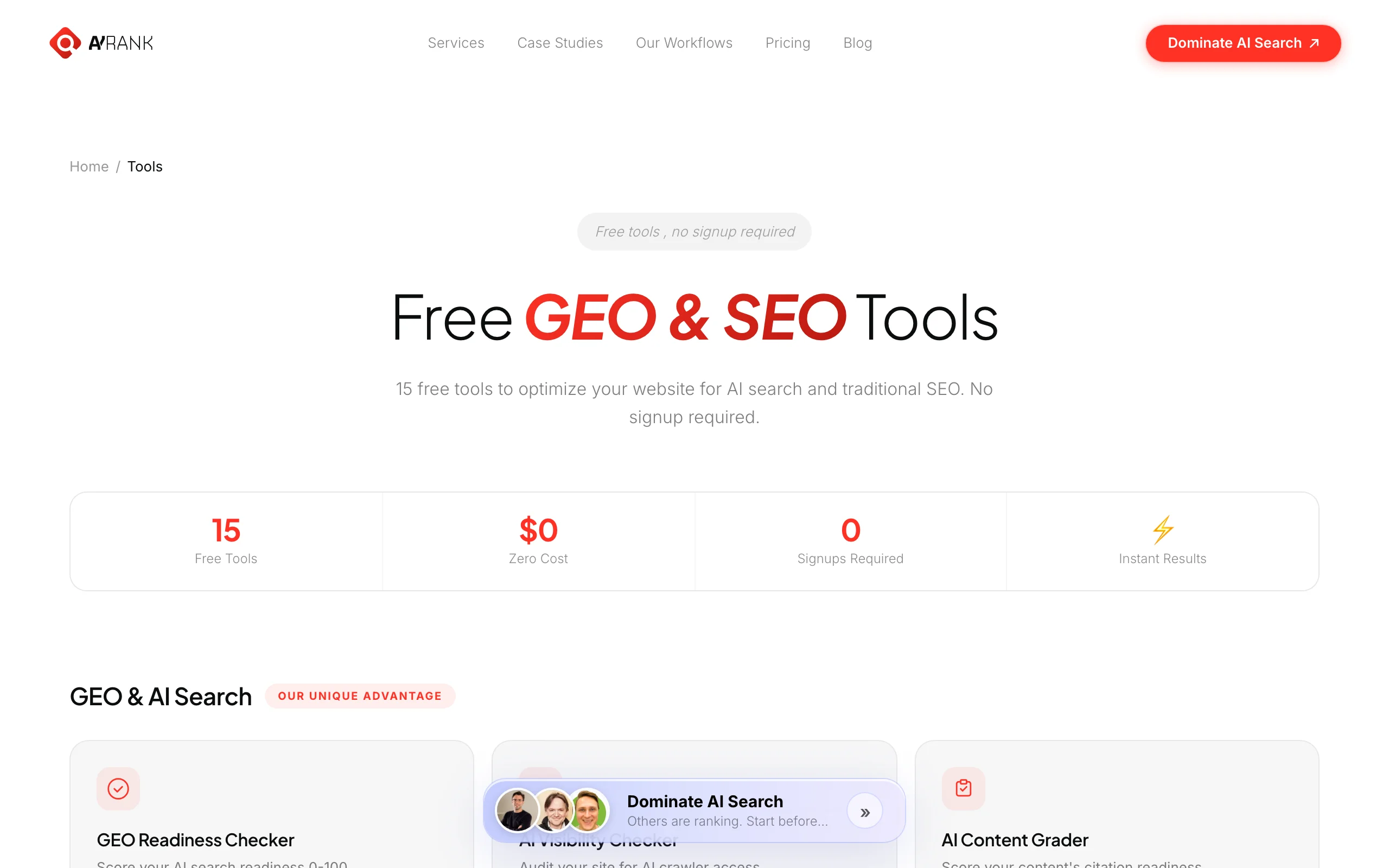 GEO Tool with AY Rank Free GEO Tools
Best for: Anyone starting with GEO who needs a full, no-cost toolkit
If you want to understand your current AI visibility before spending a dollar on paid software, AY Rank's free GEO tools are the most complete free suite available in 2026. There are 15 individual tools covering every major dimension of GEO, and every single one is free to use.
What's Included
AI Visibility Auditor, Checks whether your brand and key pages are being cited in AI Overviews, ChatGPT, and Perplexity responses. Enter your domain and target queries; the tool returns a citation rate score and a breakdown by platform.
GEO Score Checker, A composite score (0–100) built from entity authority, content structure, schema completeness, and AI-bot accessibility. Think of it as a Domain Authority equivalent, but built specifically for the AI search era.
Schema Markup Generator, Produces production-ready JSON-LD for the schema types that matter most for GEO: Organization, FAQPage, HowTo, Article, ProfessionalService, and BreadcrumbList. Paste in your business details and copy the output directly into your <head>.
AI Robots.txt Checker, Verifies that your robots.txt correctly allows (or intentionally blocks) the major AI crawlers: GPTBot, ClaudeBot, PerplexityBot, GoogleOther, and Anthropic-AI. A mis-configured robots.txt is one of the most common and easily fixed GEO problems.
Entity Coverage Analyzer, Maps your brand against the major knowledge graph sources (Google Knowledge Panel, Wikidata, Crunchbase, LinkedIn) and tells you where gaps exist. Entity recognition is a foundational signal for AI engines.
Content Structure Grader, Evaluates your page content for the structural patterns that AI retrieval systems prefer: clear H2/H3 hierarchy, definition-style openings, numbered lists, direct answers to implicit questions, and citation-worthy data points.
FAQ Schema Builder, A guided UI for building FAQ schema from scratch. Enter questions and answers; the tool validates the output, estimates its impact on featured snippets and AI Overviews, and generates the ready-to-deploy JSON-LD.
Competitor GEO Comparison, Enter your domain and up to three competitor domains. The tool runs a parallel visibility audit and returns a side-by-side comparison of AI citation rates, schema completeness, and entity presence across platforms.
AI Platform Coverage Map, A visual dashboard showing which AI platforms are (and are not) referencing your brand. Covers Google AIO, ChatGPT Browse, Perplexity, Gemini, Claude, Microsoft Copilot, and You.com.
Keyword-to-Query Translator, Traditional keywords ("best CRM for small business") are not the same as AI queries ("what CRM should a 10-person team use in 2026?"). This tool translates your keyword list into the conversational query formats that AI engines actually process.
Content Gap Finder, Compares what AI engines are saying about your category against your existing content and surfaces the specific topics, entities, and questions you have not covered.
Structured Data Validator, Goes beyond Google's Rich Results Test. Validates schema markup against the specific requirements of each major AI platform's ingestion pipeline, flagging issues that would pass Google validation but fail AI retrieval.
LLM Accessibility Checker, Scans your pages for the technical signals that affect LLM crawlability: JavaScript rendering dependency, text-to-HTML ratio, semantic heading structure, internal link density, and canonical tag correctness.
Brand Mention Tracker, Monitors AI-generated responses across platforms for unprompted mentions of your brand name and key products. Updated daily; free for up to two tracked domains.
GEO Quick Win Identifier, A prioritization engine that ingests your audit results and ranks fixes by estimated impact divided by implementation effort. Tells you exactly where to spend your next hour.
Why it ranks #1: No other free tool comes close to this breadth. Most free GEO tools are single-purpose auditors. AY Rank gives you a complete workflow from discovery through implementation through monitoring, at no cost. Start at /tools or book a free GEO audit to have our team run these tools against your site and interpret the results.
2. Geoptie
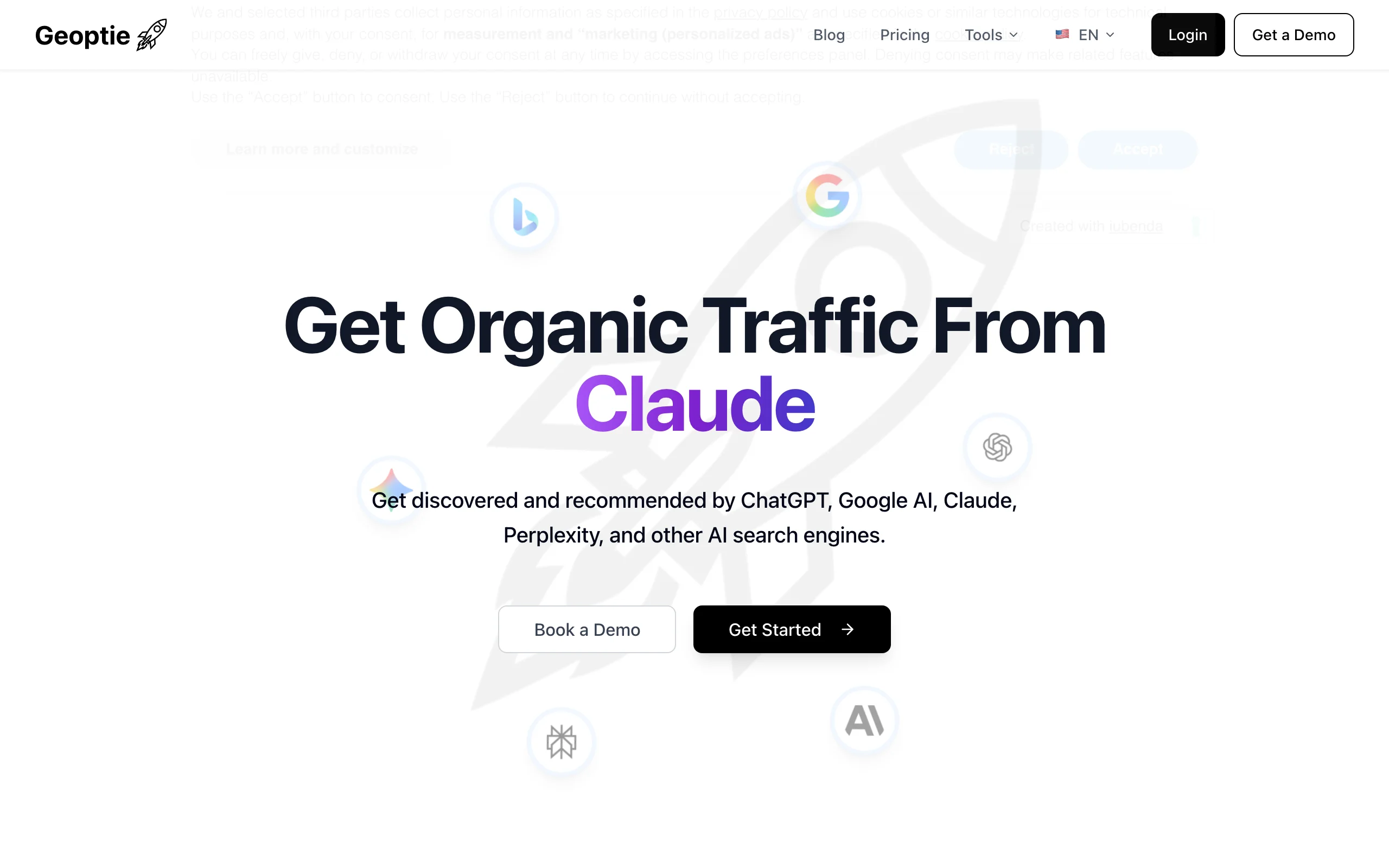 GEO Tool with Geoptie
Best for: Content teams that publish at high volume and need in-line GEO guidance
Geoptie is a content optimization platform that has evolved from an SEO writing assistant into a genuine GEO tool. Its core product is a writing editor with a real-time GEO sidebar that scores your draft against a set of AI-readiness signals as you type.
The standout feature in 2026 is its AI Answer Preview, a simulated version of how a draft article might be cited in a Perplexity or ChatGPT response, based on the current draft's structure and content. It is not perfect, but it is the closest thing to an AI search preview that exists in any writing tool.
Strengths:
- Real-time feedback integrated into the writing workflow
- Strong coverage of conversational query optimization
- Useful for training non-technical content writers on GEO fundamentals
Weaknesses:
- Limited technical GEO audit capabilities (robots.txt, schema, entity graphs)
- Pricing scales steeply for teams; the per-seat model gets expensive above 5 users
- AI Answer Preview accuracy varies significantly by topic area
Pricing: Free trial available; paid plans from ~$49/month for a single user.
3. HubSpot AEO Grader
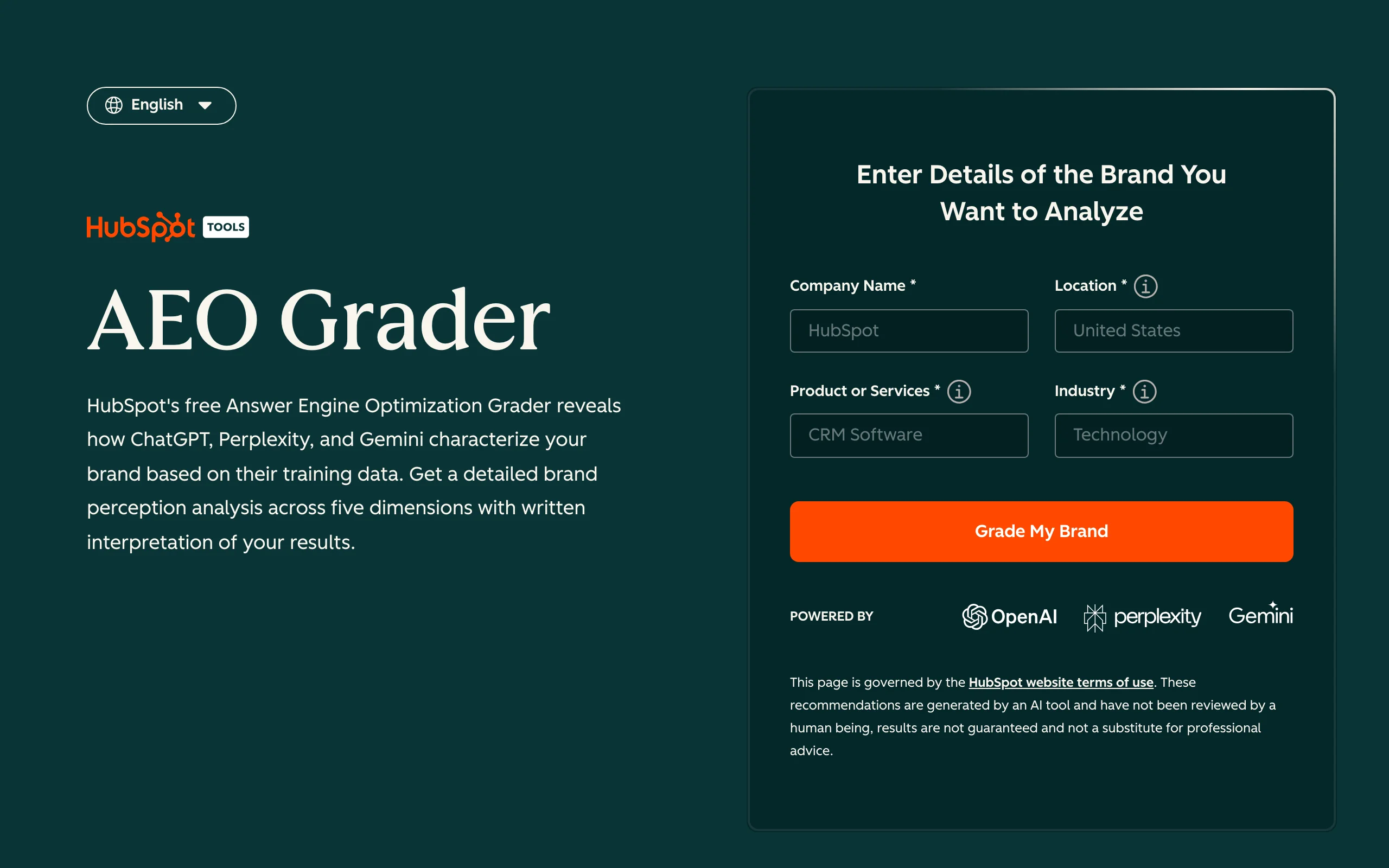 GEO Tool with HubSpot AEO Grader
Best for: HubSpot users who want a quick AEO/GEO health check without leaving the platform
HubSpot's Answer Engine Optimization Grader is a free tool embedded within the HubSpot ecosystem. Enter a URL and a target query, and it returns a structured report scoring the page on answer readiness: direct answer presence, schema markup, heading structure, and content authority signals.
It is not the deepest tool on this list, but for HubSpot customers it represents genuine value because the recommendations map directly to HubSpot's CMS editing interface. A non-technical marketer can run the grader, read the recommendations, and make the changes without leaving HubSpot.
Strengths:
- Free with any HubSpot account
- Recommendations are CMS-specific and immediately actionable
- Good introductory tool for teams new to AEO/GEO
Weaknesses:
- Shallow technical audit, misses robots.txt issues, entity gaps, AI-bot accessibility
- No multi-platform AI coverage; focused primarily on Google AIO
- Limited reporting depth compared to dedicated GEO tools
Pricing: Free for HubSpot users.
4. Otterly
 GEO Tool with Otterly
Best for: Brand monitoring in AI-generated answers across multiple platforms
Otterly is a monitoring platform focused specifically on tracking how brands, products, and competitors appear in AI-generated responses. Where most GEO tools are audit-first (they tell you what to fix), Otterly is monitor-first (it tells you what is happening right now in AI answers).
The core product ingests a list of brand terms, competitor names, and category queries, then runs them against ChatGPT, Perplexity, Google AIO, and Gemini on a scheduled basis. Results are delivered as a share-of-voice dashboard, what percentage of AI responses in your category mention your brand, compared to competitors.
Strengths:
- Best-in-class share-of-voice tracking for AI answers
- Multi-platform coverage including Google AIO, ChatGPT, Perplexity, Gemini
- Clean, presentation-ready dashboards useful for reporting to clients or executives
- Competitive benchmarking is genuinely useful for understanding where you stand
Weaknesses:
- Monitoring-only; no content optimization or technical audit features
- Needs to be paired with an audit tool (like AY Rank's free suite) for a complete workflow
- Can get expensive if you need to track many queries across many platforms
Pricing: Tiered plans; entry-level from ~$99/month.
5. Ahrefs (AI Overviews Tracking)
 GEO Tool with Ahrefs
Best for: Teams already using Ahrefs who want to layer AI Overview data into an existing SEO workflow
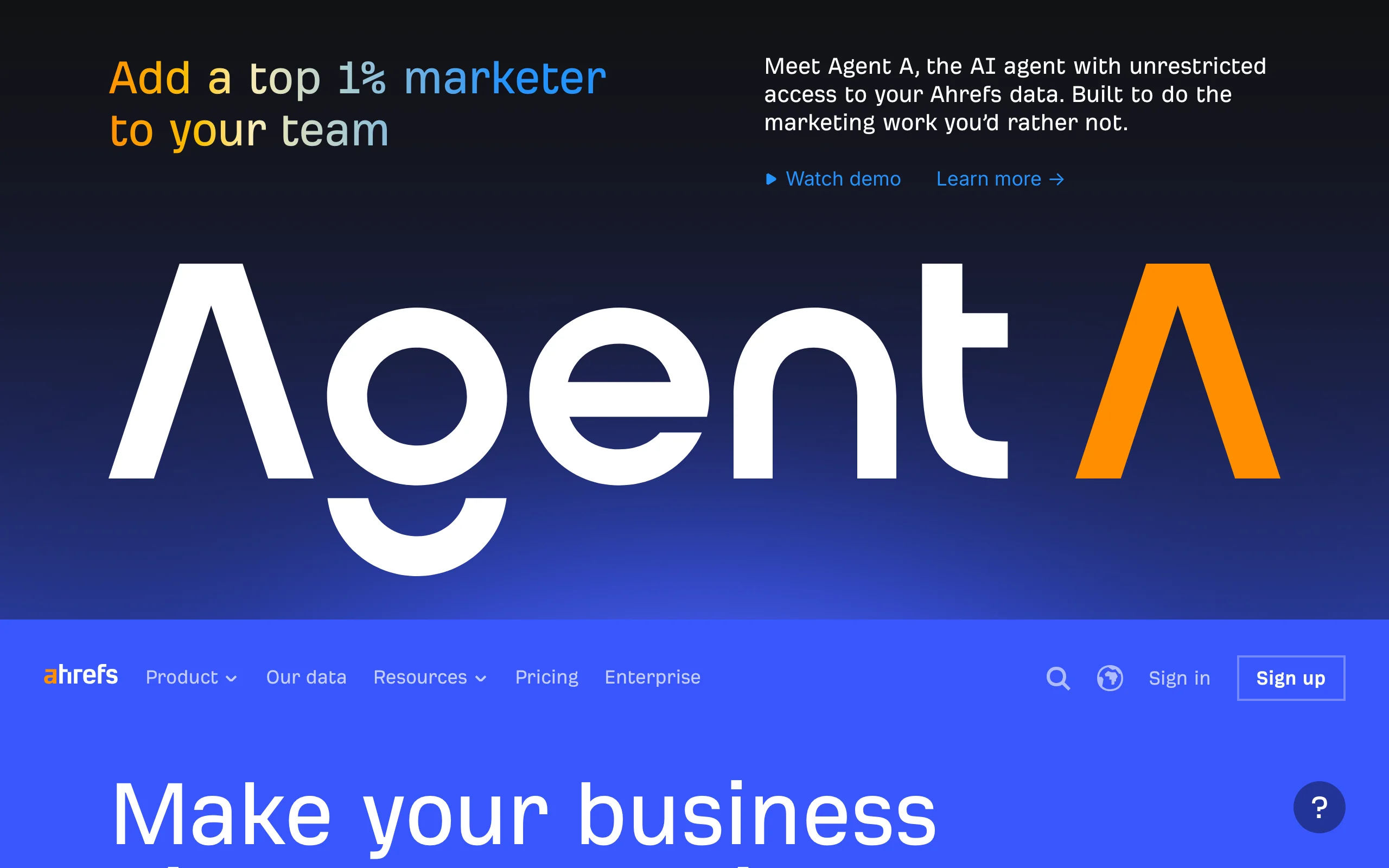
Ahrefs is not a GEO-native tool, but its 2025–2026 product updates have added meaningful AI Overview tracking to its core rank tracking suite. For every keyword you track, Ahrefs now shows whether Google is surfacing an AI Overview for that query and, where detectable, whether your domain is being cited within it.
For teams already paying for Ahrefs, this is significant new value at no additional cost. It means you can see the full picture: traditional rank position, AI Overview presence, and your citation status, all in one interface.
Strengths:
- No additional cost for existing Ahrefs subscribers
- Integrates AI data into familiar rank-tracking workflows
- Backlink data remains the best in class and is directly relevant to GEO authority
- Keyword research tools are useful for identifying high-AIO-presence queries
Weaknesses:
- AI coverage is Google-only; no ChatGPT, Perplexity, or other platform tracking
- Not a dedicated GEO tool, technical GEO audits require supplementary tools
- AI Overview citation detection is not always accurate for brand-level tracking
Pricing: Existing Ahrefs subscriptions from $129/month; AI features included.
6. UseBear
 GEO Tool with UseBear
Best for: Technical GEO audits focused on AI-bot crawlability and accessibility
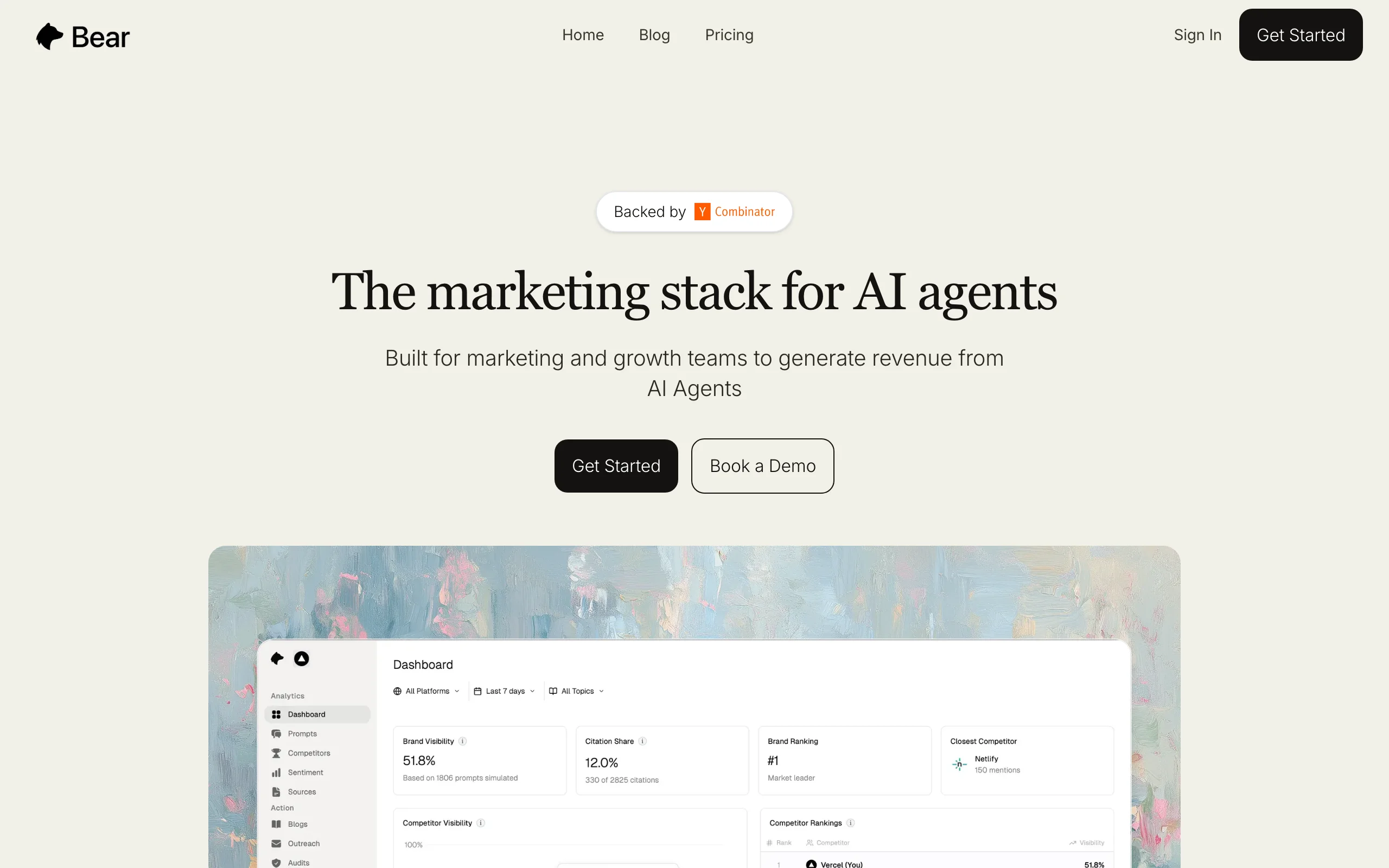
UseBear is a specialist tool built around a single question: can AI engines actually read and retrieve your pages? It crawls your site using simulated AI-bot user agents (GPTBot, ClaudeBot, PerplexityBot, and others) and reports on every technical factor that affects AI retrievability.
The tool is particularly useful for diagnosing JavaScript-rendering issues, a major but often overlooked GEO problem. If your pages rely on client-side rendering, many AI crawlers will see a blank page or incomplete content. UseBear surfaces these issues with page-level specificity.
Strengths:
- Best technical GEO audit depth available in a standalone tool
- Multi-bot simulation is genuinely differentiated
- Excellent for JavaScript-heavy sites (SPAs, headless CMS architectures)
- Actionable remediation guidance for each flagged issue
Weaknesses:
- Narrow scope, it covers technical crawlability but not content quality, entity presence, or AI citation monitoring
- Relatively steep learning curve for non-technical users
- Pricing may be hard to justify for small sites without technical SEO resources
Pricing: Plans from ~$79/month.
7. AthenaHQ
 GEO Tool with AthenaHQ
Best for: Enterprise teams managing GEO at scale across large content libraries
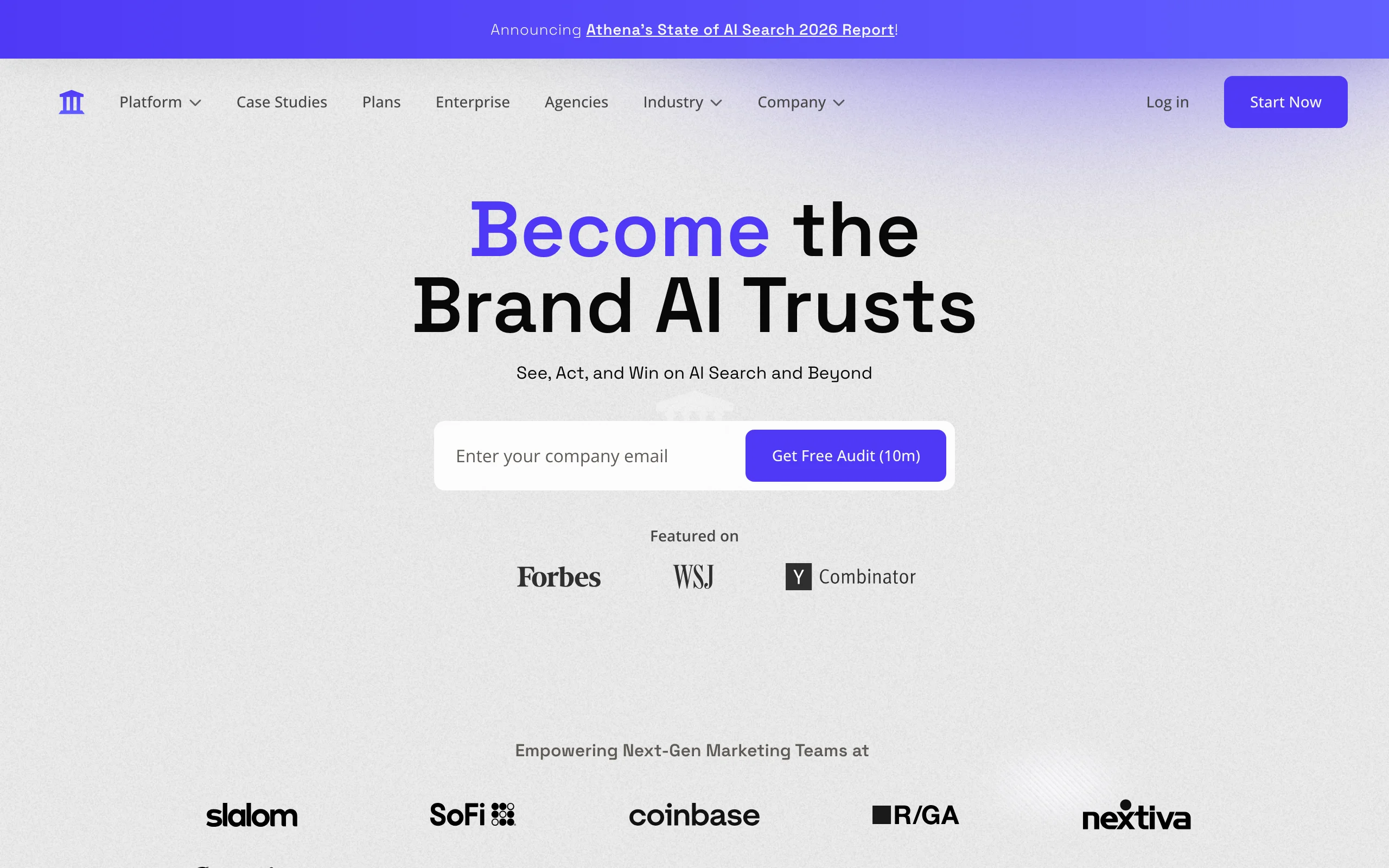
AthenaHQ positions itself as an enterprise GEO intelligence platform. It ingests your full content library, cross-references it against AI answer patterns in your category, and produces a gap analysis showing which topics, entities, and query types you are and are not covering.
The enterprise positioning is real, the platform is built for content teams managing hundreds or thousands of pages, not solo operators. It integrates with CMS platforms (Contentful, WordPress, Sanity) and pushes optimization tasks directly into editorial workflows.
Strengths:
- Best-in-class content gap analysis for large content libraries
- CMS integrations reduce friction for implementation
- Reporting depth and data export options are enterprise-grade
- Strong customer success support for onboarding
Weaknesses:
- Pricing is enterprise-tier; not accessible for SMBs or freelancers
- Overkill for sites under ~200 pages
- Some features are still maturing; roadmap-dependent for full platform value
Pricing: Enterprise contracts; custom pricing. Expect $500+/month at minimum.
8. GEO Score Online
Best for: A quick, free second opinion on your GEO health score
GEO Score Online is a lightweight free tool that produces a single composite GEO health score (0–100) for any URL. Enter your page, enter a target query, and within 30 seconds you get a scored breakdown across five dimensions: content authority, technical accessibility, entity presence, schema completeness, and answer-readiness.
It is not a replacement for a full audit, but it is genuinely useful as a quick sanity check or a way to demonstrate GEO concepts to clients who are new to the discipline. The score methodology is transparent and well-documented.
Strengths:
- Genuinely free, no account required
- Fast (results in under 60 seconds)
- Clear scoring methodology
- Useful for quick comparisons between pages or against competitors
Weaknesses:
- No depth below the composite score, you get a number, not a fix-list
- No monitoring or ongoing tracking capability
- Single-page analysis only; no site-wide crawl
Pricing: Free.
9. AI Rank Lab
 GEO Tool with AI Rank Lab
Best for: Tracking AI-search ranking trends over time for a defined keyword set
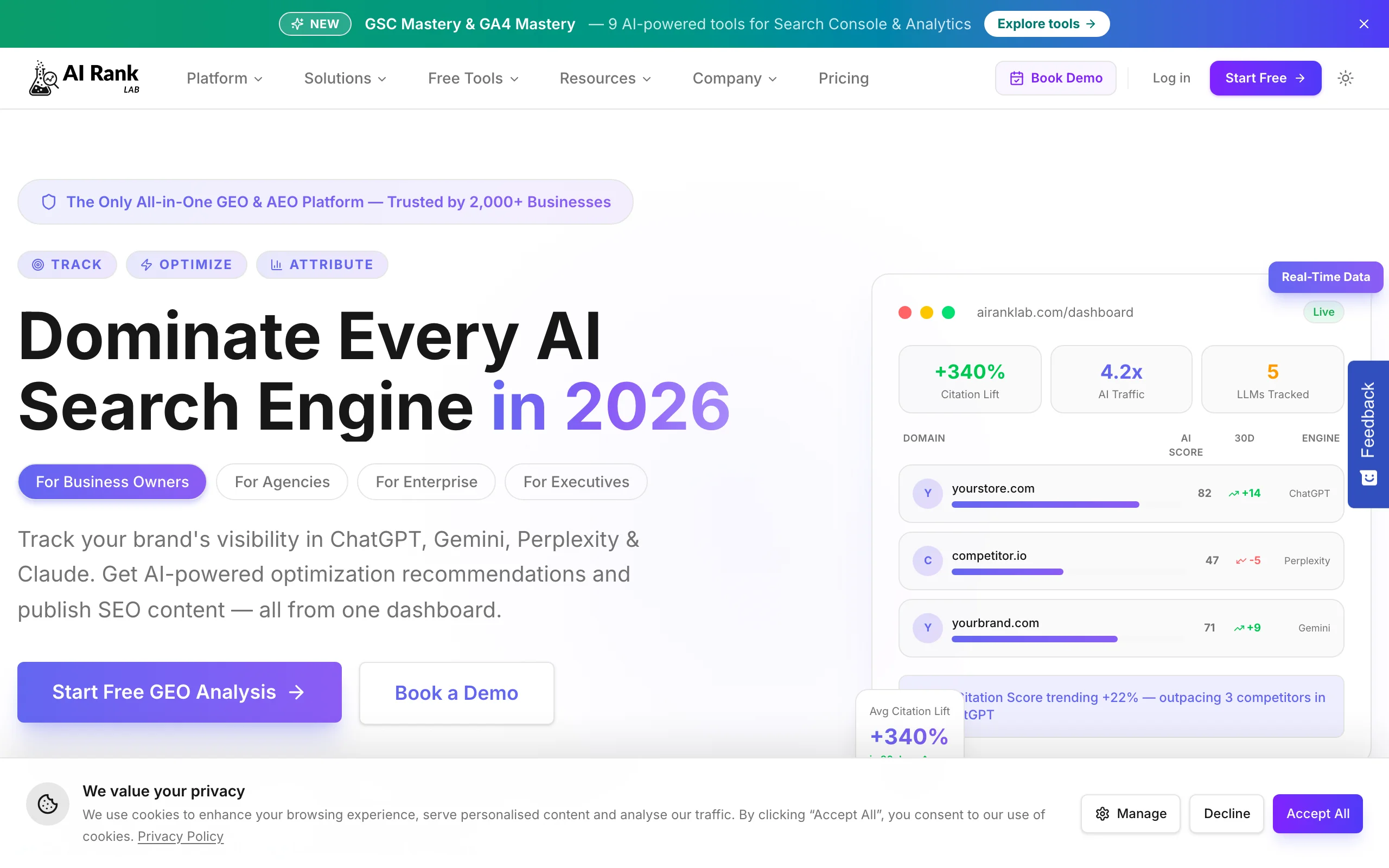
AI Rank Lab is a ranking tracker purpose-built for AI search. Where traditional rank trackers report a position number (rank #3 for "best CRM"), AI Rank Lab reports a citation probability, the estimated likelihood that an AI engine will cite your content for a given query.
The platform covers ChatGPT Browse, Perplexity, and Google AIO. Historical data going back to early 2025 means you can see trends and attribute visibility changes to specific content or technical updates you made.
Strengths:
- Citation probability metric is a meaningful improvement over binary citation tracking
- Historical trend data is valuable for understanding what is working
- Clean API for teams that want to pull data into custom dashboards or reporting pipelines
Weaknesses:
- No content optimization guidance, tracking-only
- Coverage of Gemini and Copilot is limited compared to other platforms
- Relatively small customer base means less community benchmarking data
Pricing: Plans from ~$149/month.
10. Chatbeat
Best for: PR and communications teams tracking brand presence in AI conversations
Chatbeat approaches GEO from a brand monitoring angle. It continuously queries AI platforms with prompts related to your brand, competitors, and industry, then tracks and analyzes how your brand is described, recommended (or not recommended), and positioned in AI-generated answers.
The tool is particularly valuable for brand reputation work, it surfaces not just whether your brand is cited, but how it is characterized. Are AI engines describing you accurately? Are they recommending you or a competitor for specific use cases? Are there negative associations being amplified?
Strengths:
- Sentiment and characterization analysis of AI mentions (unique on this list)
- Useful for PR, comms, and brand teams, not just SEO practitioners
- Alerts for unexpected brand mentions or characterization changes
- Covers a wide range of AI platforms including newer entrants
Weaknesses:
- Not an optimization tool, tells you what is happening, not what to do about it
- Pricing can escalate quickly for broad query coverage
- Some overlap with Otterly; choose based on whether characterization analysis is a priority
Pricing: Plans from ~$199/month.
GEO Tools Comparison Table
| Tool | Type | Free Tier | AI Platforms Covered | Best For |
|---|---|---|---|---|
| AY Rank Free Tools | Full suite (15 tools) | Yes, fully free | ChatGPT, Perplexity, Google AIO, Gemini, Claude, Copilot | Complete GEO workflow, any team size |
| Geoptie | Content optimization | Trial only | Google AIO, Perplexity | High-volume content teams |
| HubSpot AEO Grader | Page-level grader | Yes (HubSpot users) | Google AIO | HubSpot CMS users |
| Otterly | AI brand monitoring | No | ChatGPT, Perplexity, Google AIO, Gemini | Share-of-voice tracking |
| Ahrefs | SEO + AI Overviews | No | Google AIO only | Existing Ahrefs subscribers |
| UseBear | Technical GEO audit | No | GPTBot, ClaudeBot, PerplexityBot | JS-heavy or technical sites |
| AthenaHQ | Enterprise GEO platform | No | ChatGPT, Perplexity, Google AIO | Large content libraries (200+ pages) |
| GEO Score Online | Quick score checker | Yes, fully free | Multi-platform composite | Quick sanity checks |
| AI Rank Lab | AI rank tracking | No | ChatGPT, Perplexity, Google AIO | Citation trend analysis |
| Chatbeat | Brand monitoring + sentiment | No | Multi-platform | PR and brand reputation teams |
How to Choose the Right GEO Tool
With ten solid options on this list, the right choice depends on where you are in your GEO journey and what specific problem you are trying to solve.
If you are starting from zero: Use AY Rank's free tool suite to run a complete baseline audit before spending anything on paid tools. The 15 free tools cover every dimension you need to understand your current AI visibility, prioritize fixes, and start measuring progress.
If you are managing content at volume: Add Geoptie to your content workflow once the baseline audit is done. Real-time GEO guidance in the editor is the fastest way to systematically improve content quality at scale.
If you need to report AI visibility to clients or executives: Otterly's share-of-voice dashboards are the most presentation-ready output available and will save significant manual reporting time.
If your site is JavaScript-heavy: UseBear is a non-negotiable addition to your technical stack. AI-bot rendering issues are invisible to most other tools.
If you are already paying for Ahrefs: Enable AI Overview tracking in your existing keyword tracking projects before evaluating any additional tools.
If you manage a brand with significant PR exposure: Chatbeat's characterization analysis is uniquely valuable and complements audit-focused tools well.
The One Thing Every GEO Tool Cannot Replace
Every tool on this list produces data. None of them produce strategy.
The most common mistake teams make when they start with GEO is to install a tool, generate a report, and then implement every recommendation without a coherent prioritization framework. GEO improvements compound, entity authority improvements amplify the effect of schema additions; content structure improvements amplify the effect of entity recognition, so the order of implementation matters.
If you want a structured approach to GEO that goes beyond tool outputs, the AY Rank GEO Programme takes you through a sequenced 90-day implementation covering entity establishment, technical accessibility, content restructuring, and AI citation building. Or, if you want to understand your current baseline before committing to anything, start with a free GEO audit and get a human-reviewed analysis of where you stand.
Frequently Asked Questions
What is the best free GEO tool in 2026?
The most complete free GEO toolset in 2026 is AY Rank's suite of 15 free tools. It covers AI visibility auditing, schema generation, entity analysis, technical accessibility, content structure grading, and competitor comparison, all at no cost. For a single free point-in-time score, GEO Score Online is a useful quick-check option.
Do I need a paid GEO tool to rank in AI search?
No. Many of the most impactful GEO improvements, fixing robots.txt for AI bots, adding FAQ and Organization schema, restructuring content with clear hierarchies and direct answers, building entity presence on Wikidata and Crunchbase, can be identified and implemented using free tools. Paid tools deliver more monitoring depth, enterprise workflow integrations, and historical trend data, but they are not prerequisites for meaningful AI visibility improvements.
What is the difference between GEO tools and SEO tools?
Traditional SEO tools measure ranking position in blue-link search results. GEO tools measure citation rate and visibility in AI-generated answers. The underlying data sources are different (AI response sampling vs. SERP scraping), the metrics are different (citation probability vs. rank position), and the recommendations are different (entity establishment and content structure vs. keyword density and backlink acquisition). Some platforms like Ahrefs now offer both, but purpose-built GEO tools generally provide deeper AI-specific insight.
How often should I audit my GEO performance?
Run a full technical and content audit quarterly, or after any major site change (platform migration, content restructuring, CMS update). Monitor AI citations and share-of-voice monthly using a tool like Otterly or Chatbeat. Check your GEO Score on key pages monthly and after publishing new content targeting high-value queries. The AI search landscape changes quickly, what worked six months ago may need updating as platforms evolve their retrieval and ranking signals.
This post is part of our GEO Optimization guide. Related reading: 7 Best SEO Agencies in Toronto, 7 Best SEO Agencies in New York, 7 Best SEO Agencies in Paris.

Adel tracks AI citation rates across ChatGPT, Perplexity, Gemini, and AI Overviews. He turns raw visibility data into actionable insights that guide our optimization strategy.
Full Bio →